Best Comeback Stories from the 2026 WNBA Season
5 September 2026
The 2026 WNBA season will be remembered for many things: the expansion drama, the rising tide of rookie talent, and the sheer physicality of playoff basketball. But what truly defined the year was the art of the comeback. Not just the on-court rallies from double-digit deficits, but the deeper, more human resurrections. Players returning from career-threatening injuries, franchises clawing back from the brink of irrelevance, and veterans refusing to let their narratives end in disappointment. This season proved that in a league growing more competitive by the year, resilience is the most valuable currency.

The Anatomy of a Modern WNBA Comeback
Before diving into the specific stories, it is worth understanding why 2026 produced so many dramatic reversals. The league's parity has shifted. The days of a single super-team steamrolling the competition are fading. With the salary cap rising and player movement becoming more strategic, the margin between the fourth seed and the ninth seed is razor thin. This means that a slow start is no longer a death sentence. A team sitting at 5-10 in June can realistically look at a 16-8 run over the summer and find themselves hosting a first-round series.The other factor is sports science. The medical and training staffs across the league have become exceptional at managing workloads. Players are peaking later in the season, not earlier. Teams that understand this, and do not panic in May, are often rewarded in September. The psychological component matters just as much. A comeback is rarely just about X's and O's; it is about a locker room that refuses to fracture when things go wrong. The teams that succeeded in 2026 were the ones who treated early-season losses as data points, not verdicts.
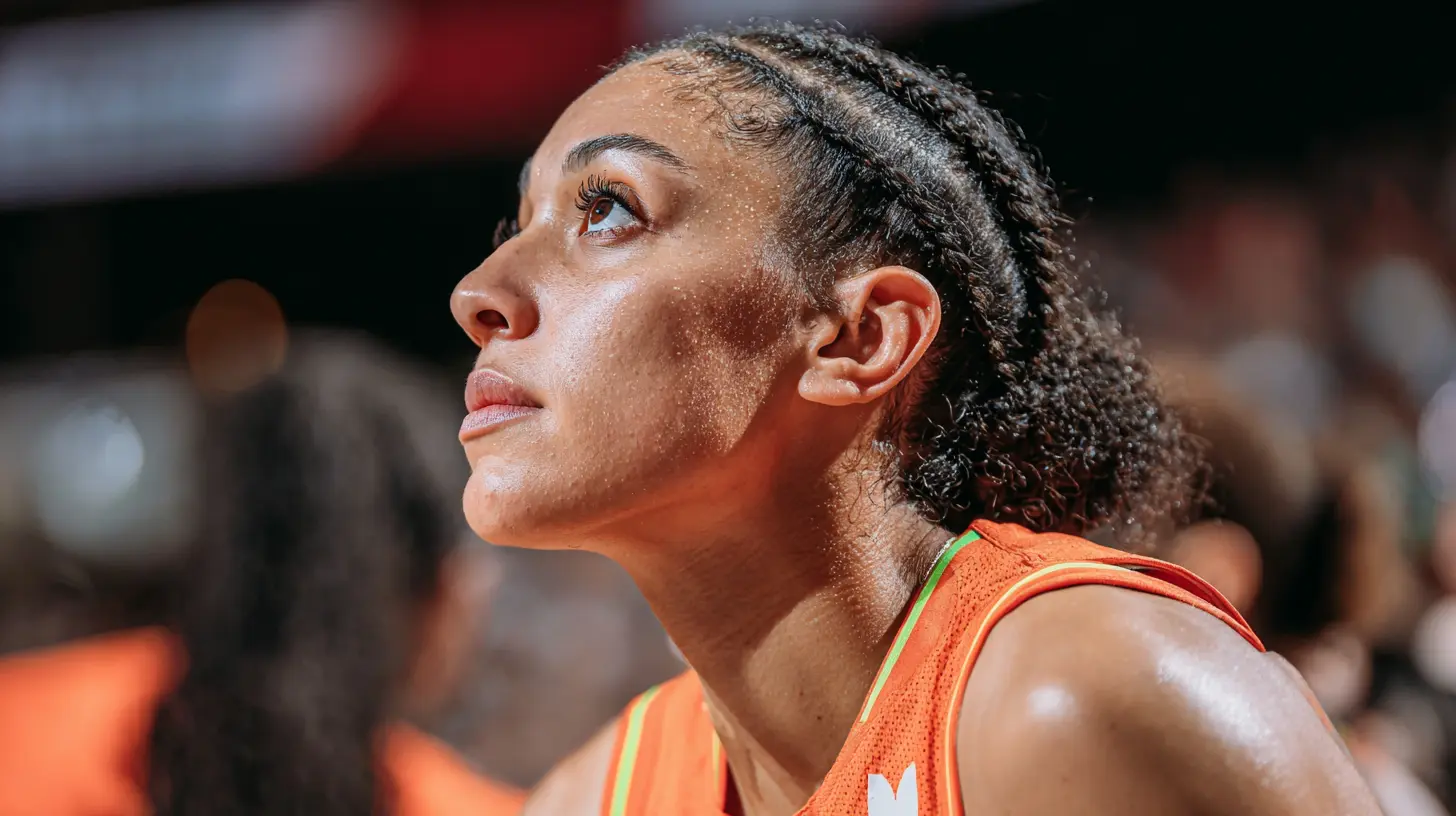
The Return of the Phoenix: A Franchise Reborn
The most significant organizational comeback story of 2026 was the Phoenix Mercury. Going into the season, the narrative was grim. The team had missed the playoffs in 2025 for the second straight year, and whispers of a full rebuild were growing louder. The front office had made a series of questionable trades that left the roster looking like a collection of parts rather than a cohesive unit. The fan base was restless, and the local media had begun to question whether the franchise could attract top free agents anymore.Then, something shifted. It was not a single blockbuster trade or a draft-night miracle. It was a commitment to a defensive identity. The coaching staff, led by a new defensive coordinator, installed a switching scheme that confused opponents early in the shot clock. They started forcing turnovers at a rate that was unsustainable in theory but became their calling card in practice. By mid-July, the Mercury had the best defensive rating in the Western Conference.
The offensive side took longer to click. They relied heavily on isolation plays in the half-court, which led to stagnant stretches. But the coaching staff made a critical adjustment: they started running more early-offense actions, pushing the ball before the defense could set. This unlocked their young guards, who had been struggling in the half-court. The result was a 12-game winning streak in August that propelled them from the 10th seed to the 4th seed.
The trade-off here is worth examining. The Mercury sacrificed some offensive efficiency for defensive intensity. This is a gamble because in a seven-game series, teams often figure out defensive schemes. The risk is that you become a regular-season wonder and a playoff disappointment. However, the Mercury mitigated this by adding a veteran stretch forward at the trade deadline who could punish teams for packing the paint. It was a masterclass in roster construction, showing that a comeback is not just about playing harder, but about playing smarter as the season evolves.

The Individual Redemption: A Star's Journey Back from Injury
While team comebacks are inspiring, the individual stories often carry more emotional weight. The 2026 season saw the triumphant return of a player whose career was in serious jeopardy. A former All-Star guard, who had suffered a catastrophic Achilles tear in the 2024 Finals, spent the entire 2025 season on the sideline. The typical recovery timeline for that injury is 10 to 12 months, but for a player whose game was built on explosive first steps and lateral quickness, the doubt was immense.Her return in 2026 was not immediate glory. She started the season on a strict minutes restriction, often sitting out back-to-back games. Her early performances were tentative. She was passing up open shots, deferring to teammates, and looking like a shell of her former self. Critics began to write her off, suggesting that the injury had robbed her of the burst that made her special.
The turning point came in late June. In a nationally televised game against the defending champions, she finally let go. She attacked the rim with a ferocity that had been missing for two years. She finished with a season-high in points, but more importantly, she looked fearless. The mental hurdle was cleared. From that point on, her minutes restriction was lifted, and she began to resemble the player who had once been a top-five MVP candidate.
The lesson here is about patience, both for the player and the organization. The common mistake in these situations is to rush the player back because the team is struggling. The Mercury (and later, her new team in the Eastern Conference) resisted that urge. They understood that a short-term loss was acceptable if it meant having her at 90 percent capacity for the playoffs. This is a difficult balance for any franchise. The pressure from fans and media to win now is immense. But the data suggests that players who return from Achilles injuries need a full year before they regain their peak explosiveness. The teams that ignore this timeline are often the ones that end up losing the player to a re-injury.

The Mid-Season Coaching Change That Worked
Sometimes a comeback is sparked by a change at the top. The 2026 season had a prime example of this with the Chicago Sky. The team started the year with high expectations after a strong offseason. But by the end of May, they were 4-11, and the locker room was reportedly fractured. The head coach had lost the room, and the players were running their own offense, which was a disaster.The front office made the difficult decision to fire the coach in early June. This is always a risky move. A mid-season coaching change can often make things worse, as the players have to learn a new system on the fly. But in this case, the assistant coach who was promoted brought a completely different energy. He simplified the playbook, focusing on a few core sets that the players could execute in their sleep. He also empowered the veterans to hold the younger players accountable, creating a player-led culture that the previous coach had stifled.
The results were immediate. The Sky won seven of their next ten games. The offense, which had been stagnant, started flowing through the high post, creating easy looks for cutters. The defense, which had been passive, became aggressive, trapping ball handlers and forcing them into tough angles. The team looked like a completely different unit.
The trade-off here is between stability and adaptability. Firing a coach mid-season is a gamble because it signals instability to free agents and can disrupt the development of young players. However, when the alternative is a lost season, the risk is often worth it. The key is to have a clear plan for the replacement. The Sky did not just promote the assistant on a whim; they had a specific tactical identity in mind that they believed the assistant could implement. This is the best practice for any team in this situation: do not make the change unless you have a clear idea of what you are changing to.
The Rookie Who Refused to Hit the Wall
Every year, there is a rookie who starts strong and then fades as the grueling 40-game season takes its toll. The 2026 season had the opposite story. A rookie forward, drafted in the middle of the first round, started the year slowly. She was overthinking on the court, hesitating on her jump shot, and getting lost on defense. Many pundits labeled her a project who would need two or three years to contribute.But this player had a unique trait: an obsessive work ethic. She was known to stay after practice for an extra hour every single day, working on her footwork and her release. She also hired a private nutritionist and a sleep coach, understanding that the physical toll of the WNBA season is often underestimated.
Her comeback was a slow burn. She did not have a breakout game; she had a breakout month. In July, she started to figure out the pace of the professional game. She stopped forcing her offense and started letting the game come to her. Her defense improved dramatically, as she learned to use her length to disrupt passing lanes rather than just blocking shots. By August, she was a starter, and by the playoffs, she was arguably the team's most important two-way player.
This story is a lesson in patience for fans and analysts. The common misconception is that a rookie's first few games are indicative of their future. This is rarely true. The jump from college to the WNBA is massive, not just in terms of athleticism, but in terms of basketball IQ. Players are facing veterans who have seen every move and know every trick. It takes time to adjust. The best practice for a team is to give a rookie a defined role early on, even if it is a small one, and then expand that role as they show progress. Throwing a rookie into the fire and expecting them to save the franchise is a recipe for failure.
The Veteran's Last Stand
There is also the comeback of the veteran who was counted out. A 34-year-old center, a former Defensive Player of the Year, had spent the last two seasons battling chronic knee issues. She had been traded twice in the previous year, and many assumed she was just a locker room presence at this point, a mentor for younger players rather than a contributor.She signed a one-year, veteran minimum deal with a contender in the offseason. She reported to training camp out of shape, which was a red flag. The coaching staff was worried. But she had a conversation with the general manager that changed her trajectory. She promised to lose 15 pounds before the start of the season, and she did. She changed her diet, started doing yoga for flexibility, and changed her game.
Instead of trying to post up against younger, stronger defenders, she became a pick-and-pop threat. She developed a reliable mid-range jumper that she had rarely used earlier in her career. On defense, she stopped trying to block every shot and instead focused on positioning and drawing charges. She became a smarter player, not a more athletic one.
Her comeback was not about returning to her prime. It was about reinventing herself for a new role. This is a critical lesson for any athlete facing the end of their career. The mistake is to try to be the player you were five years ago. The reality is that you must adapt to what your body can do now. This veteran did exactly that, and she became a critical piece of a championship run, providing veteran leadership and clutch shooting off the bench. Her story is proof that a comeback does not always mean returning to glory; sometimes it means finding a new way to be valuable.
The Comeback That Fell Short: A Cautionary Tale
Not every comeback story has a happy ending, and the 2026 season had a few cautionary tales. The most painful was the Las Vegas Aces. They started the season 12-2, looking like the best team in the league. Then, a rash of injuries hit their starting lineup. They lost their point guard and their starting center within the same week. The team went into a tailspin, losing eight of their next twelve games.The coaching staff tried to patch things together, but the chemistry was broken. The players who were asked to step up were not used to their new roles. The offense became predictable, and the defense lost its communication. They managed to right the ship enough to make the playoffs, but they were a shadow of their former selves. They were swept in the first round.
The lesson here is that a comeback requires a foundation. If a team is relying on a single star or a specific lineup combination, they are vulnerable. The best teams in the league have a "next woman up" mentality that is built during training camp, not during a crisis. The Aces had neglected to develop their bench players early in the season, assuming they would not need them. When they did need them, they were not ready. This is a common mistake for teams with high expectations. They focus on the starting five and forget that the season is a marathon. The best practice is to give bench players meaningful minutes early in the season, even if it costs you a few wins, so that they are prepared when their number is called.
Comparing the Comeback Strategies
When we look at the successful comebacks of 2026, a few patterns emerge. The Mercury used a defensive identity shift. The Sky used a coaching change. The injured star used patience and a modified role. The rookie used hard work and time. The veteran used reinvention. All of these are valid strategies, but they are not interchangeable.The defensive shift is most effective when you have the personnel to execute it. You need versatile, athletic defenders who can switch on screens. If you do not have that, you will get burned. The coaching change is most effective when the problem is tactical or motivational, not when the roster is simply not good enough. The patient return from injury is most effective when the player has a strong support system and is mentally ready to handle the grind of rehab.
The common thread is that all successful comebacks require a clear-eyed assessment of the problem. You cannot fix a roster issue with a coaching change. You cannot fix a chemistry issue with a defensive scheme. You must first diagnose the root cause of the struggle, and then apply the correct remedy. This sounds obvious, but it is surprising how often teams panic and apply the wrong solution.
Misconceptions About Comebacks
There are several misconceptions about comebacks that persist in the basketball world. The first is that a comeback is purely a matter of heart and desire. This is a romantic notion, but it is largely false. A team does not win 12 straight games because they suddenly want it more. They win because they made a tactical adjustment that exploited an opponent's weakness, or because a player returned from injury and added a new dimension to the offense.The second misconception is that a team that starts slow is a "bad" team that is just getting lucky. This is often not the case. Teams that have new players or a new coach often take time to gel. The early season is essentially a testing ground. The teams that use this time to experiment and find their identity are often the ones that peak at the right time.
The third misconception is that a comeback must be linear. Teams will have setbacks. They will lose games they should win. They will have bad shooting nights. The key is not to avoid these setbacks, but to respond to them correctly. A team that loses a close game and then comes back and blows out the next opponent is on the right track. A team that loses a close game and then loses the next two by 20 points is in trouble.
Practical Advice for Teams and Players
For teams looking to engineer a comeback in the future, the advice is simple but difficult to execute. First, do not overreact to a small sample size. Give the roster at least 15 games before you make any major decisions. Second, identify your core identity. Are you a defensive team or an offensive team? Do you want to play fast or slow? Once you know this, you can make targeted adjustments.Third, manage minutes carefully. The goal is to have your best players healthy and fresh for the final stretch of the season and the playoffs. This means resting them on back-to-backs and limiting their minutes in blowouts. It may cost you a regular-season win or two, but it is worth it.
For players, the advice is to focus on what you can control. You cannot control the coaching decisions or the trades. You can control your effort, your attitude, and your preparation. The players who made successful comebacks in 2026 were the ones who showed up early, stayed late, and did the extra work. They also communicated effectively with their coaches, asking for feedback and being open to criticism.
The Lasting Legacy of 2026
The 2026 season will be studied for years to come as a testament to the unpredictability of sports. The teams and players who made the most memorable comebacks did not do so by accident. They did so through a combination of strategic planning, mental fortitude, and a willingness to adapt. They understood that a season is not defined by how you start, but by how you finish.The stories from this year serve as a blueprint for future generations. They show that a career is not over when you have a bad year. A franchise is not doomed when it has a bad month. The only true failure is giving up. The 2026 WNBA season proved that the human spirit, when combined with smart preparation, is capable of overcoming almost any obstacle. That is the real beauty of the game, and it is why we keep watching.
all images in this post were generated using AI tools
Category:
Season RecapsAuthor:

Umberto Flores
Discussion
rate this article
2 comments
Cadence Lee
What a thrilling season! The heart and determination from these players is incredible. Every comeback not only showcases their talent but also reminds us why we love this game... Go team!
September 22, 2026 at 10:29 AM
Umberto Flores
Thanks for your enthusiasm! The players truly showed resilience this season. It's moments like these that capture the heart of the game. Let's keep cheering them on!
Mistral O'Brien
These comeback stories truly highlight the resilience and determination of players. It's inspiring to see how they overcame challenges and setbacks, reminding us all of the power of perseverance and hope in sports.
September 11, 2026 at 4:11 AM
Umberto Flores
Absolutely, these stories showcase the incredible spirit of the players. Their journeys remind us that perseverance can lead to remarkable achievements. It's a powerful testament to what can happen when you never give up.