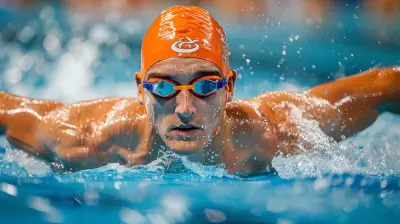
Doping in the Shadows: Athletes Who Got Caught and Denied It
6 April 2026
Let’s face it—sports are supposed to be about talent, training, and heart. But every now and then, a dark cloud rolls in over the track, the field, or the ring. That cloud? Doping. And what’s even murkier than using banned substances? Getting caught red-handed and boldly denying it.
Today, we’re diving deep into the shadowy world where elite athletes get snagged for doping but still flash those innocent eyes and say, “Not me.” Buckle up, because this ride through the annals of sports scandal is as shocking as a plot twist in a crime thriller.

What is Doping, Really?
Before we start name-dropping (don't worry, we're getting there), let's break it down. Doping is the use of performance-enhancing drugs (PEDs) to gain an unfair advantage. These can range from anabolic steroids to blood transfusions and hormones like EPO or HGH.It’s like giving your video game character unlimited power-ups—except it's real life, and it’s illegal.

Why Do Athletes Risk It?
The pressure is insane. From lucrative sponsorships and global fame to mind-numbing competition, the stakes are ridiculously high. Some athletes see a shortcut, and they take it. But when they're caught? Oh boy—the denial game begins.You might think, "Wouldn't they just admit it?" Nah, not always. Admitting it is like saying, "I cheated all of you," and not many are ready to wear that shame.

1. Marion Jones – From Gold to Gone
Remember Marion Jones? She was the darling of the 2000 Sydney Olympics. Five medals. Blazing speed. Unstoppable.But behind those thunderous sprints lay a secret. For years, Jones denied using PEDs. “I’ve never failed a drug test,” she said—classic line, right? But in 2007, the truth spilled. She admitted to using steroids provided by BALCO.
She handed back her medals, lost endorsements, and even did time behind bars for lying to federal investigators. From icon to inmate—talk about a fall from grace.

2. Lance Armstrong – The King of Denial
When we say denial, one name echoes louder than the rest: Lance Armstrong.Seven-time Tour de France champion, cancer survivor, global inspiration. But beneath the surface? A carefully orchestrated doping operation.
For over a decade, Armstrong denied everything. He bullied teammates, sued accusers, and kept his legacy spotless—until the walls came crashing down.
In 2013, sitting across from Oprah, he finally came clean. It was one of the most jaw-dropping confessions in sports history. “Yes,” he said. “I doped.” The world was stunned. His legacy? Shattered.
3. Alex Rodriguez – Home Run Haze
Baseball star Alex Rodriguez, or A-Rod, is another classic case. He was a powerhouse at the plate, a legend in the making.But in 2009, his name appeared in leaked reports linking him to steroid use. His first response? Denial, naturally.
Only after the evidence piled up did he confess—but his apology felt more like PR damage control than heartfelt remorse. Then came the Biogenesis scandal in 2013—more drugs, more lies. MLB slapped him with a 162-game suspension, the longest for PED use at the time.
Denial cost A-Rod more than games—it nearly cost him his legacy.
4. Ben Johnson – One Step Too Fast
At the 1988 Seoul Olympics, Canadian sprinter Ben Johnson broke records and sprinted into history. But just 48 hours later, he tested positive for stanozolol, an anabolic steroid.His reaction? Total denial.
Johnson claimed sabotage. He floated theories about spiked drinks and jealous rivals. But the evidence was overwhelming. His gold medal was stripped, and his reputation tanked overnight.
Years later, while promoting his tell-all book, he finally hinted at what many already knew—he wasn’t clean. It was too little, too late.
5. Maria Sharapova – A Pill, a Ban, and a Lot of Questions
Tennis sweetheart Maria Sharapova shocked the world in 2016 when she tested positive for meldonium, a banned substance.At first, she said it was an honest mistake—she had been using it for years “for medical reasons” and didn’t realize it had landed on the banned list.
But critics raised eyebrows. An elite athlete not knowing the substances they put in their body? Hard to buy. Though she owned up to the positive test, she never quite admitted wrongdoing. The line between mistake and denial was paper-thin.
The result? A 15-month ban—and a forever asterisk next to her name.
6. Justin Gatlin – The Repeat Offender
If one doping scandal is a bad look, two is a fashion disaster. Enter Justin Gatlin.The American sprinter tested positive twice: once in 2001 and again in 2006. The first time, he blamed his ADHD medication. The second time? He pointed fingers at a massage therapist who supposedly rubbed cream on him without his knowledge.
Sound fishy? Most thought so.
Despite the bans, Gatlin returned to dominate—earning a silver at the 2016 Rio Olympics. But the denials left fans divided. Was he a redemption story or a walking contradiction?
7. Asafa Powell & Sherone Simpson – Pills and Blame
Jamaican sprinters Asafa Powell and Sherone Simpson tested positive for oxilofrine in 2013. Their excuse? Contaminated supplements given by their trainer.Both flat-out denied intentional doping and said they trusted the wrong people. While technically true, the reality is: athletes are responsible for what goes into their bodies.
Their bans were shortened, but the denials didn’t convince everyone. It was another case of, “It wasn’t me,” in a sport haunted by doping ghosts.
8. Tyson Gay – A Tearful Apology Without Details
Tyson Gay, once the fastest man in America, failed a drug test in 2013. But instead of classic denial, he took a different route—vague sorrow.He apologized, sure. But when asked what he took or how it happened? Radio silence.
He returned after a one-year ban, but fans were left frustrated. The apology felt hollow without full disclosure. It was like reading a mystery novel that skips the ending.
Why Denial is the Go-To Move
So why do so many athletes deny, even in the face of mountains of evidence?- Fear of losing everything: Fame, endorsements, medals.
- Legal consequences: Admitting guilt can bring lawsuits or criminal charges.
- Public image: No one wants to be the villain.
But denial doesn’t erase the truth. In many cases, it just delays the inevitable downfall.
The Bigger Picture: What This Says About Sports
These high-profile scandals are more than just juicy drama—they raise real questions. Are anti-doping agencies doing enough? Are teams complicit? Is the pressure too intense?Sports should be about pushing human limits, not science experiments. When athletes cheat, they don’t just rob their competitors—they rob fans, too.
Can We Ever Trust Again?
It’s hard, right? Every new record or breakout star now comes with a silent asterisk in our minds: “Are they clean?”But there’s still hope. Stricter testing, whistleblower protections, and athlete education are steps in the right direction. And transparency—brutal, uncomfortable honesty—might just be the only way forward.
Final Thoughts
Doping scandals are like car wrecks—you want to look away, but you just can’t. The athletes we talked about today lived in the shadows, either hiding their truth or spinning tales to save face.Some eventually came clean. Others? Well, they’re still out there, insisting on innocence.
But here's the kicker: Denial doesn't change the reality. So whether it’s track, court, or field—let’s keep pushing for clean, honest competition.
Because sports, at their best, are about character—not chemistry.
all images in this post were generated using AI tools
Category:
Sports ScandalsAuthor:
Umberto Flores
Discussion
rate this article
2 comments
Seraphis Harmon
This article sheds light on a tough topic. Doping not only impacts the integrity of sports but also the lives of athletes who deny their actions. It's crucial for all involved to prioritize honesty and fair play to ensure a healthier future for competitive athletics. Thank you for addressing this issue.
May 3, 2026 at 11:56 AM
Umberto Flores
Thank you for your thoughtful comment. It's an important conversation, and honesty in sports is essential for everyone involved. I'm glad this article resonated with you.
Zaren McEachern
Integrity is the true victory, beyond any medal.
April 9, 2026 at 2:38 AM
Umberto Flores
I completely agree. Integrity defines true sportsmanship, and it's a shame when athletes lose sight of that.