Early Team Chemistry Reports That Could Shape 2027
1 October 2026
Every four years, the same ritual unfolds. A major tournament ends, the confetti gets swept away, and within weeks the conversation shifts to the next cycle. Pundits start projecting rosters. Fans argue about which young players deserve a shot. And somewhere in the background, coaching staffs are already running the numbers on something far less glamorous but arguably more important than raw talent: how these players actually fit together.
That is what team chemistry reports are for. And the early ones for the 2027 cycle are already trickling in, even if most of them never make headlines until something goes wrong.
Here is the thing about chemistry. It is easy to spot when it is missing and almost impossible to quantify when it is present. A team with perfect chemistry does not look like it is doing anything special. Passes arrive on time. Rotations happen without confusion. A defender covers for a teammate without being told. None of that shows up in a box score, which is exactly why it gets ignored until a roster falls apart under pressure.
So let us talk about what these early reports actually tell us, why they matter more than most people think, and how to read them without falling for the usual traps.
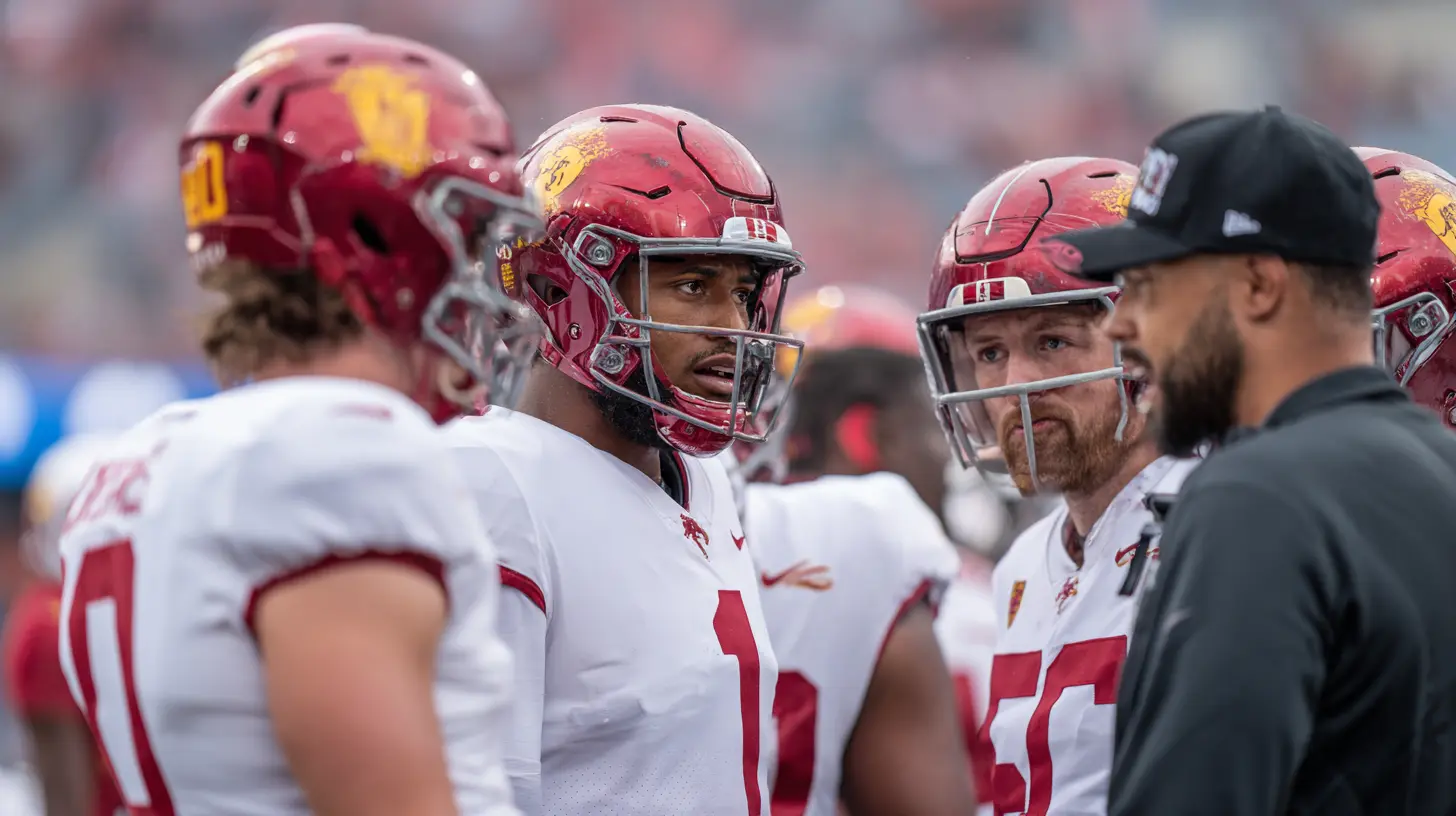
What Team Chemistry Actually Means
Most fans hear "chemistry" and picture players joking around in the locker room. That is part of it, but it is the least interesting part. Real chemistry operates on at least four levels, and they do not always move together.Functional chemistry is about execution. Two players who have logged hundreds of minutes together start anticipating each other's movements. A point guard knows his big man will slip the screen instead of popping. A winger knows his fullback will overlap rather than hold. This kind of chemistry is built through repetition and is the most measurable of the four.
Social chemistry is about trust. Do players genuinely like each other? Not necessarily as friends, but as professionals they respect. Teams can win without this, but it tends to crack under adversity.
Role chemistry is about acceptance. Does each player understand and accept what the team needs from them? A talented scorer who resents coming off the bench can poison a locker room faster than a losing streak.
Systemic chemistry is about fit within a scheme. A roster can be full of talented individuals who simply do not complement each other stylistically. Think of a run-and-gun team forced into a half-court system, or a possession-based soccer side stocked with players who thrive on counterattacks.
When people say a team "has great chemistry," they usually mean all four are working. When a team implodes despite obvious talent, one of these four is usually broken.

Why Early Reports Matter More Than Final Ones
Here is a counterintuitive point. The chemistry report you get twelve months before a major tournament is often more useful than the one you get three months out.Why? Because early reports capture the foundation. They tell you whether the basic building blocks are in place. By the time you are three months out, you are mostly measuring execution, and execution can improve quickly with focused training. Foundation cannot.
Think of it like building a house. If the foundation is poured wrong, no amount of last-minute decorating fixes it. If the foundation is solid, you can afford to have a messy few weeks and still finish strong.
This is why smart coaching staffs treat early chemistry data as a strategic tool rather than a curiosity. They are not asking "are we ready?" They are asking "what do we need to build, and do we have time?"

Reading the Signals Without Overreacting
The biggest mistake people make with early chemistry reports is treating them as verdicts. They are not. They are snapshots, and snapshots lie all the time.A few years back, a national team went through a stretch where players were visibly frustrated with each other on the field. Passes were being ignored. Players were throwing their hands up. The hot take machine went into overdrive about a locker room in crisis.
Six months later, that same team was celebrating a title. What happened? A veteran player had a private conversation with a younger star. A tactical tweak gave two players clearer roles. Nothing dramatic. The chemistry report was accurate, but it was describing a moment, not a trajectory.
So when you read these reports, ask three questions:
1. Is this a structural problem or a temporary friction?
2. Are the people involved committed to fixing it?
3. Does the coaching staff have the authority and skill to manage it?
If the answer to all three is favorable, relax. If two of them are unfavorable, pay attention. If all three are unfavorable, start worrying.

The 2027 Cycle: What Early Signals Are Showing
Now let us get specific. The 2027 cycle is interesting because several major programs are going through generational turnover at the same time. Veterans who anchored the last cycle are aging out. Young players who were role players are being asked to lead. That transition always creates chemistry stress.Here is what to watch for across different sports and programs.
Leadership Vacuum Risk
When a long-tenured captain leaves, the vacuum does not fill itself. Someone has to step up, and that someone is not always the best player. This is one of the most misunderstood dynamics in team sports. The best player is often the worst captain because their standard is unreachable for everyone else.Early reports from several programs suggest that the natural leaders are not always the obvious names. Watch for players who are consistently the first to arrive and last to leave, who speak up in huddles, and who teammates mention unprompted. Those are your chemistry anchors, and they matter more than whoever leads the team in scoring.
Style Clashes in Transition
When a team shifts philosophy, say from a defensive-minded approach to a more aggressive one, players recruited for the old system can struggle. This is not a character flaw. It is a fit issue.Early reports from programs going through this shift show a common pattern. The veterans who buy in early become the bridge. The ones who resist become a drag. Coaching staffs that handle this well do it through honest conversations early, not through public pressure late. If you are watching a team in transition, watch how the coaching staff talks about the process. Defensiveness is a red flag. Transparency is a good sign.
Cross-Generational Friction
Every team has a generational divide. Players who came up in one era have different habits, different expectations, and different communication styles than players who came up five years later. This is not new. What is new is how quickly it becomes visible through social media and how slowly it resolves without deliberate effort.The programs that handle this well build structured opportunities for players to interact outside their usual circles. Not forced bonding exercises, which almost never work. Just shared experiences that create natural connections.
The Role Acceptance Question
This is the quiet killer. A roster can look perfect on paper and still fail because three players all believe they should be starting. Early reports often pick this up before it becomes public. Look for signs like inconsistent effort in practice, passive-aggressive comments in interviews, or a noticeable drop in body language when a teammate succeeds.The fix is not always to bench the unhappy player. Sometimes it is to redefine the role so it feels meaningful. Sometimes it is to trade or release the player. The right answer depends on the person, the team, and the timeline. What never works is pretending the problem does not exist.
Practical Advice for Coaches and Program Builders
If you are running a program, here is how to use chemistry reports without overreacting or underreacting.Measure early and often. One data point is noise. A pattern is a signal. Build a simple framework for tracking chemistry across the four dimensions I described earlier. It does not need to be complicated. Even a short weekly check-in with team leaders can surface issues before they escalate.
Separate personality from performance. A player who is quiet and introverted is not a chemistry problem. A player who is disruptive and self-centered is. Do not confuse style with substance.
Address issues directly and privately. Public callouts damage trust. Private conversations, even difficult ones, build it. The best coaches are the ones players trust to tell them the truth without humiliating them.
Give roles meaning. Players accept roles when they understand why the role matters and how it contributes. A bench player who understands their job is to change the game's tempo will accept that role. A bench player who thinks they are just filling minutes will resent it.
Protect the locker room. Not every issue needs to be public. Not every conflict needs to be resolved in front of cameras. The best teams have a clear boundary between what stays internal and what goes external.
What Fans and Analysts Should Avoid
If you are consuming chemistry reports, here is what to watch out for.Do not confuse intensity with dysfunction. Some teams argue constantly and win championships. Some teams are quiet and lose. Conflict is not the problem. Unresolved conflict is.
Do not overvalue body language. A player who looks frustrated after a bad play is not necessarily a bad teammate. They might just care. The stories that emerge later often reveal that the "problem" player was actually the one holding things together.
Do not assume talent wins. It does not. Talent gets you into the conversation. Chemistry determines whether you stay in it.
Do not treat early reports as final. They are starting points. The interesting question is not "what is the chemistry now?" but "what is the trajectory?"
The Trade-Offs Nobody Talks About
Here is a nuance that rarely gets discussed. Building chemistry sometimes costs you talent. A less talented player who fits the system and elevates teammates can be more valuable than a more talented player who disrupts the balance.This is uncomfortable for fans who follow recruiting rankings and transfer portals. It is also true. The teams that consistently win are not always the ones with the most talent. They are the ones with the best fit.
That does not mean talent does not matter. It means talent is necessary but not sufficient. A team of average players with perfect chemistry will beat a team of stars with broken chemistry more often than people expect.
The trade-off is real, and it is one every program has to make. Do you take the best available player, or the best available fit? The answer depends on what you already have. If your core is stable, you can afford to take a risk on talent. If your core is fragile, you cannot.
Common Mistakes in Chemistry Building
Let me list the ones I see most often.Forcing bonding. Trust is built through shared experience, not through trust falls. The best chemistry comes from doing hard things together and coming out the other side.
Ignoring the quiet players. The loudest voices are not always the most influential. Some of the most important chemistry work happens in one-on-one conversations that nobody sees.
Overcorrecting after a loss. One bad game does not mean the chemistry is broken. Reacting to every dip creates instability.
Underreacting to patterns. One bad game is noise. Five bad games with the same symptoms is a pattern. Learn to tell the difference.
Assuming chemistry is fixed. Chemistry is not a destination. It is a practice. Teams that won last year can lose it this year if they stop paying attention.
What to Watch for in 2027
As the 2027 cycle progresses, here are the signals that will tell you which teams are building something real and which ones are just collecting talent.Watch how teams respond to adversity. Watch who speaks up when things go wrong. Watch whether players celebrate each other's success genuinely or performatively. Watch how coaching staffs handle conflict. Watch whether roles are clear and accepted.
None of these things show up in a stat sheet. All of them show up in the final result.
The teams that win in 2027 will not necessarily be the ones with the most talent. They will be the ones that figured out how to make the talent work together. That is the lesson every cycle teaches, and it is the one most people forget by the time the next tournament starts.
Final Thoughts
Chemistry is not magic. It is a skill, and like any skill it can be built, measured, and managed. The early reports for 2027 are already telling us something. Whether we listen is up to us.If you are a coach, start paying attention now. If you are a fan, start looking past the highlight reels. The teams that win are usually the ones that figured out the boring stuff first.
all images in this post were generated using AI tools
Category:
Preseason AnalysisAuthor:

Umberto Flores
Discussion
rate this article
1 comments
Lysander Perez
Building chemistry early is crucial; it sets the tone for a successful season ahead.
October 1, 2026 at 3:03 AM