How Sleep Will Transform Athletic Recovery by 2027
28 April 2026
You know that feeling when you hit the snooze button for the third time, and your body just screams for more rest? For most of us, that’s just a lazy Tuesday. But for athletes—from weekend warriors to pros—that feeling is the difference between a personal best and a pulled hamstring. Let’s be real: we’ve all been sold the idea that recovery means ice baths, compression boots, and fancy supplements. But what if I told you that by 2027, the single most powerful tool in an athlete’s recovery arsenal will be something you already do every night? Sleep. Not just any sleep, but engineered sleep—optimized, personalized, and scientifically weaponized to rebuild muscle, sharpen the mind, and extend careers.
I’m not talking about vague “get eight hours” advice. I’m talking about a paradigm shift. By 2027, sleep won’t just be a passive recovery phase; it will be an active, measurable, and trainable component of athletic performance. Think of it like this: if your body is a high-performance car, sleep is the pit crew that not only changes the tires but also rewires the engine, recalibrates the GPS, and upgrades the suspension—all while you’re unconscious. Sounds wild, right? Stick with me, because the science is already sprinting ahead.
The Current State of Sleep and Recovery (Spoiler: It’s a Mess)
Right now, most athletes treat sleep like an afterthought. “I’ll sleep when I’m dead,” they joke, while chugging pre-workout at 10 PM. But here’s the ugly truth: chronic sleep deprivation is the silent killer of athletic potential. Studies show that athletes who sleep less than 7 hours per night are 1.7 times more likely to suffer an injury. That’s not a typo. When you’re sleep-deprived, your reaction times drop, your immune system tanks, and your body produces less human growth hormone (HGH)—the stuff that actually repairs muscle tissue.Right now, we’re still stuck in the 20th-century mindset. Coaches yell at athletes to “get more rest,” but they don’t give them a roadmap. The result? Athletes rely on caffeine, ice baths, and massage guns to mask the problem. But by 2027, that approach will look as outdated as a VHS tape. Why? Because we’re about to unlock sleep’s true potential through technology, neuroscience, and a little bit of biohacking magic.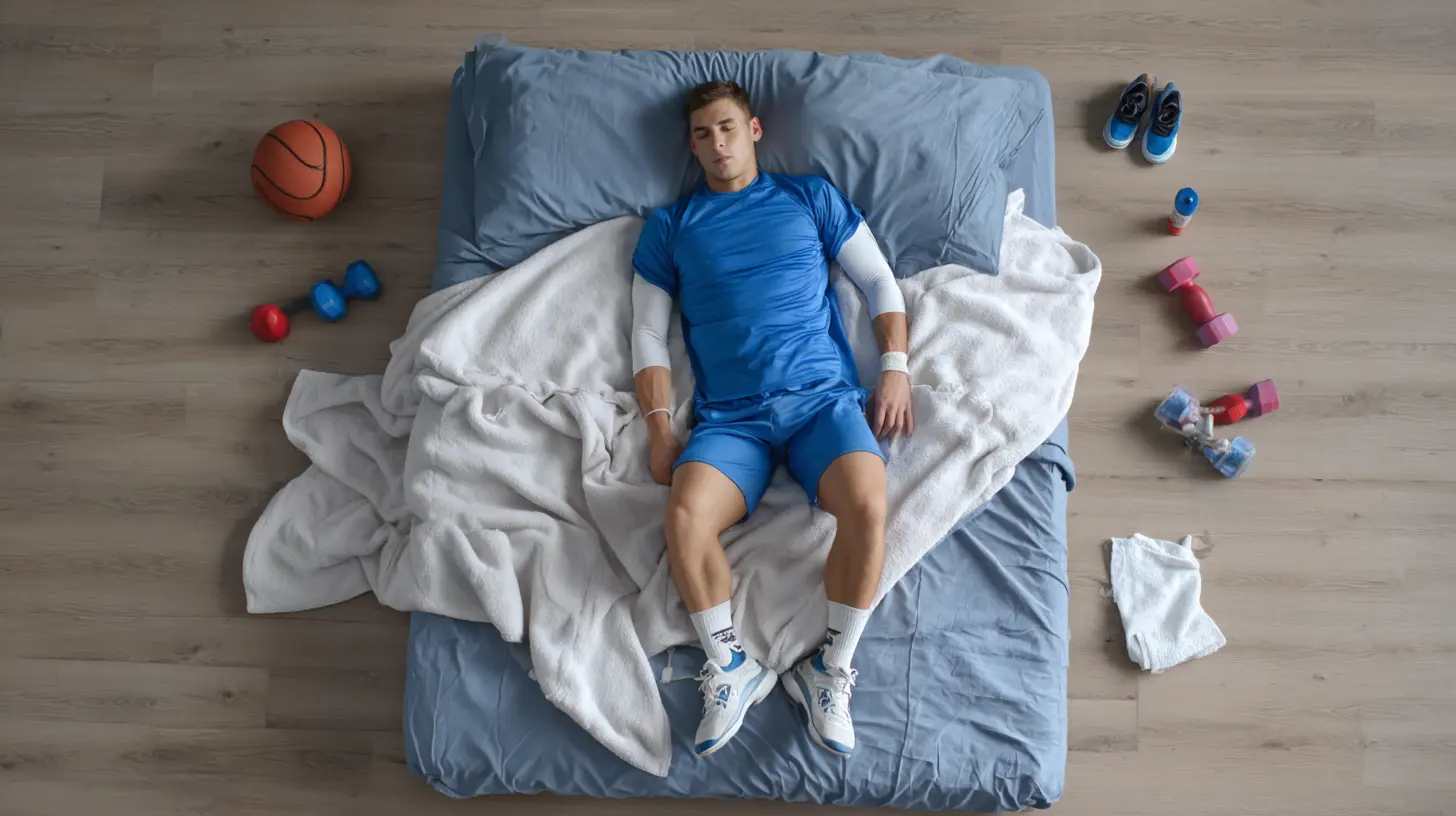
The Science of Sleep: Why Your Brain is the Real Athlete
Before we jump into the future, let’s get one thing straight: sleep isn’t a light switch. It’s a complex, multi-stage process. You’ve got NREM (non-rapid eye movement) sleep, which includes deep sleep—the phase where your body repairs tissues, builds bone, and strengthens your immune system. Then there’s REM sleep, where your brain processes emotions, consolidates memories, and—crucially for athletes—refines motor skills. Think of REM as your brain’s personal coach, running drills while you’re out cold.Here’s the kicker: most athletes don’t get enough deep sleep or REM sleep. They might clock 8 hours, but if the quality is garbage—thanks to late-night screen time, stress, or poor sleep hygiene—they’re shortchanging their recovery. By 2027, we’ll have the tools to hack these stages with surgical precision. Imagine a wearable that doesn’t just track your sleep but actively nudges you into deeper states using sound frequencies or temperature regulation. That’s not sci-fi; that’s already being tested in labs.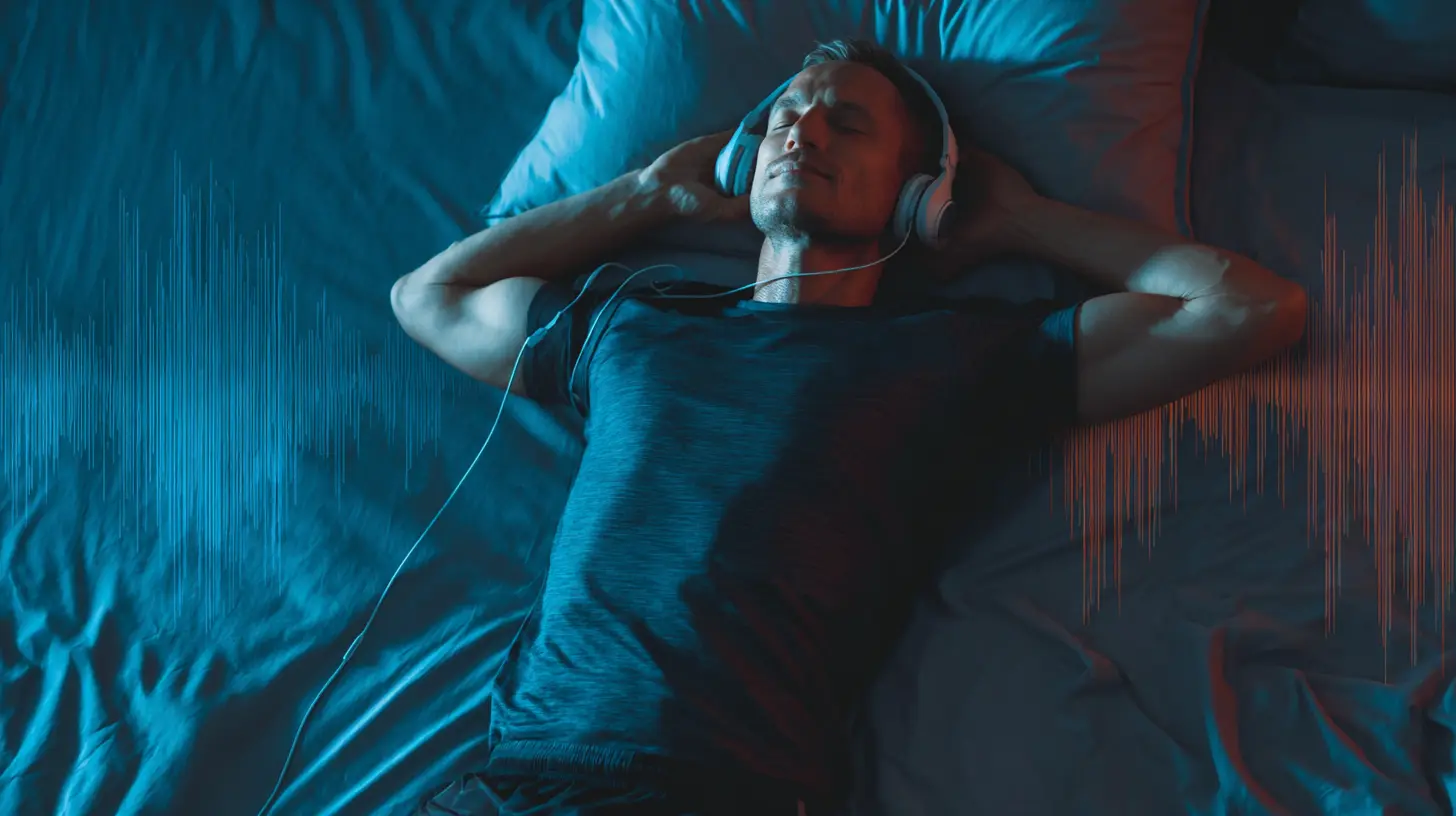
How Technology Will Supercharge Sleep Recovery by 2027
1. Wearables That Go Beyond Step Counting
You probably own a smartwatch that tells you how many hours you slept. But by 2027, wearables will be like having a sleep neurologist on your wrist. We’re talking about devices that measure heart rate variability (HRV), skin temperature, blood oxygen levels, and even brainwave activity in real time. These wearables won’t just give you a “sleep score”; they’ll prescribe specific actions. For example, if your HRV is low, the device might recommend a magnesium supplement or a specific breathing exercise before bed.Already, companies like Oura and Whoop are paving the way. But in three years, expect these devices to integrate with your smart home. Your thermostat will drop to 65°F (the optimal sleep temperature), your smart lights will shift to a warm amber hue, and your mattress will adjust its firmness based on your sleep stage. It’s like having a personal sleep butler—minus the awkward small talk.
2. Neurostimulation: The “Smart Pillow” Revolution
Here’s where it gets trippy. Researchers are developing headbands and pillows that use gentle electrical or auditory stimulation to enhance specific brainwaves during sleep. For instance, a device called “Somnify” (hypothetical, but based on real tech) could detect when you’re entering deep sleep and send a subtle, inaudible tone that boosts delta waves—the signature of restorative sleep. By 2027, this tech will be cheap enough for college athletes to use.Why does this matter? Because deep sleep is when your pituitary gland releases HGH. More deep sleep equals more HGH equals faster muscle repair. Imagine finishing a brutal leg day, plugging into your neuro-headband, and waking up with legs that feel 90% recovered instead of 50%. That’s the difference between being ready for tomorrow’s practice or limping through it.
3. Personalized Sleep “Prescriptions” via AI
Forget generic advice like “avoid caffeine after 2 PM.” By 2027, AI will analyze your sleep data, training load, diet, and even your genetics to create a custom sleep prescription. Are you a slow-twitch endurance athlete? Your AI coach might prioritize REM sleep to enhance motor learning. Are you a powerlifter? It’ll push for more deep sleep to maximize muscle protein synthesis.This isn’t guesswork. We’re already seeing companies like SleepScore Labs use machine learning to predict sleep quality. In the near future, your sleep prescription will update daily based on your training intensity, stress levels, and even the phase of the moon (okay, maybe not the moon, but you get the point). The result? Recovery that’s as dynamic as your workout plan.
The Role of Nutrition in Sleep-Driven Recovery
Let’s talk about the elephant in the bedroom: what you eat and drink. By 2027, sleep nutrition will be a distinct field, separate from general sports nutrition. We’ll see products designed specifically to boost sleep quality without making you groggy. Think tart cherry juice (rich in melatonin) combined with magnesium glycinate and glycine—a combo that’s been shown to reduce sleep onset time by 30%. But it won’t stop there.Expect “sleep shakes” that contain slow-release casein protein (to fuel muscle repair overnight) paired with tryptophan and GABA. These won’t be one-size-fits-all; they’ll be tailored to your chronotype. Are you a night owl? Your shake might include a small dose of melatonin. A morning lark? You’ll get more L-theanine to promote calmness. The goal is to make sleep anabolic—meaning it actively builds muscle and repairs tissue, not just stops the damage.
How Athletes Will Train Their Sleep Like a Muscle
Here’s a concept that’ll blow your mind: sleep training. Just like you practice free throws or perfect your squat form, by 2027, athletes will practice falling asleep faster and staying in deep sleep longer. This isn’t a gimmick; it’s based on a technique called “sleep restriction therapy” combined with biofeedback.Imagine this: you wear a headband that monitors your brainwaves. It vibrates gently when you start drifting into lighter sleep, training your brain to stay in deeper stages. Over weeks, your sleep efficiency improves. You’ll also practice “power naps” that are timed to the exact minute—20 minutes for a quick refresh, 90 minutes for a full sleep cycle. By 2027, elite sports teams will have sleep coaches just like they have strength coaches. In fact, some already do.
The Mental Game: Sleep as a Cognitive Performance Enhancer
Athletes don’t just need physical recovery; they need mental sharpness. Sleep is where your brain cleans out metabolic waste (like amyloid plaques), consolidates tactical memories, and primes your prefrontal cortex for decision-making. By 2027, we’ll see a huge emphasis on sleep for “cognitive recovery.” Think about a quarterback reading a defense or a tennis player anticipating a serve. That split-second decision relies on sleep.Studies already show that sleep-deprived athletes make poor decisions under pressure. They’re more impulsive, less accurate, and slower to react. By 2027, sleep optimization will be a key part of game preparation. You might see players using “sleep banks”—extra sleep in the nights leading up to a big game—just like they carb-load. The NFL is already experimenting with this, and by 2027, it’ll be standard practice.
The Dark Side: Ethics, Privacy, and Over-Reliance on Tech
Of course, every revolution has a shadow. By 2027, we’ll have to grapple with some tough questions. If a wearable can “hack” your sleep, should coaches have access to that data? Could teams use sleep tracking to bench players who aren’t sleeping well? And what about the pressure to optimize every single night? The line between biohacking and burnout is thin.There’s also the risk of over-reliance. If you’re glued to five different devices every night, you might actually worsen your sleep hygiene. The key is balance. Technology should augment your natural sleep, not replace it. By 2027, the smartest athletes will use tech as a tool, not a crutch. They’ll know when to unplug and just let the body do its thing.
Practical Steps You Can Take Right Now (Before 2027)
You don’t have to wait three years to start transforming your recovery. Here’s what you can do today:- Prioritize sleep consistency. Go to bed and wake up at the same time, even on weekends. Your circadian rhythm loves routine.
- Cool your room down. Keep it between 60-67°F. A cooler core temperature helps you fall asleep faster and stay in deep sleep longer.
- Cut screens 90 minutes before bed. Blue light suppresses melatonin. Instead, read a book or listen to a podcast (not about sports, for once).
- Try a magnesium supplement. Magnesium glycinate is a game-changer for muscle relaxation and sleep onset.
- Track your sleep quality, not just duration. Use a simple journal or a basic wearable. Look for patterns: do you sleep worse after high-intensity training? After eating late?
These small changes compound. By the time 2027 rolls around, you’ll be light-years ahead of the competition.
The Big Picture: Sleep as the Ultimate Performance Enhancer
Let’s zoom out for a second. The sports world is obsessed with marginal gains—tiny improvements that add up to big results. But sleep isn’t a marginal gain; it’s the foundation. Without it, everything else crumbles. By 2027, we’ll have the tools to turn sleep into a precision instrument. Athletes will recover faster, perform better, and extend their careers by years. The days of “sleep is for the weak” are ending.So, ask yourself: are you ready to embrace the sleep revolution? Or will you be the one still chugging energy drinks while everyone else is waking up rejuvenated, stronger, and sharper? The choice is yours. But remember, by 2027, sleep won’t just be a nice-to-have. It’ll be the difference between winning and watching from the sidelines.
all images in this post were generated using AI tools
Category:
Recovery And RehabAuthor:

Umberto Flores
Discussion
rate this article
2 comments
Ivan Velez
Sleep isn't just rest; it's the unsung hero of recovery. As athletes unlock its full potential by 2027, we may witness a revolution in performance and resilience.
June 27, 2026 at 4:44 AM
Umberto Flores
Absolutely! Sleep's role in recovery is often overlooked. As athletes embrace its benefits, we could see remarkable improvements in performance by 2027. Exciting times ahead!
Wolf McLanahan
This article highlights a crucial yet often overlooked aspect of sports performance. Improving sleep quality can significantly enhance recovery and overall athletic capabilities. As research evolves, it's exciting to think about how sleep innovations might reshape training regimens by 2027. A game-changer indeed!
April 28, 2026 at 4:50 AM
Umberto Flores
Thank you for your thoughts! Sleep truly is a game-changer for athletes, and I'm eager to see how innovations in this area will impact training in the coming years.