How Weather Conditions Are Influencing 2026 Preparations
23 September 2026
The 2026 sports calendar is stacked. Winter Olympics in Milan and Cortina. FIFA World Cup across the United States, Canada, and Mexico. Commonwealth Games in Glasgow. A full slate of motorsport, tennis, athletics, and cricket running alongside all of it. And every single one of those events is being planned around weather data that looks nothing like what planners had ten or twenty years ago.
This is not a story about climate anxiety. It is a story about logistics, money, athlete safety, and competitive integrity. Weather has always shaped sport. What has changed is the speed at which conditions shift, the unpredictability of the patterns, and the cost of getting preparation wrong. Teams, organizers, and governing bodies that treat weather as a footnote are already behind. The ones that treat it as a core planning variable are building a real edge.
Let me walk through what is actually happening, why it matters, and what smart preparation looks like heading into 2026.
Why 2026 Is a Different Kind of Challenge
Every major event cycle has its weather headaches. What makes 2026 unusual is the geographic and seasonal spread of the marquee events combined with the fact that several of them sit in regions experiencing measurable shifts in heat, precipitation, and seasonal timing.The Winter Olympics depend on snow and cold. Reliable snowpack at lower elevations is becoming harder to guarantee, which pushes reliance onto artificial snowmaking and higher-altitude venues. That changes everything from course design to athlete training to the energy budget of the host region.
The World Cup spans a continent with wildly different climates in June and July. Matches in Dallas, Miami, Mexico City, and Vancouver will be played under conditions that range from brutal humid heat to high-altitude thin air to mild coastal evenings. A single tournament format now has to accommodate all of that.
The Commonwealth Games in Glasgow in July carry their own risks. Scotland in summer is usually mild, but heat events and heavy rain both hit the UK with more frequency than the historical averages suggest. Track and field, cycling, and outdoor team sports all feel that directly.
None of this is hypothetical. It is the operational reality that prep teams are already working inside.
The Real Problem Is Not "Bad Weather"
Here is the misconception that trips up a lot of people: they think the challenge is weather being bad. It is not. The challenge is weather being less predictable within the window that matters.A football match in 38 degree Celsius heat is manageable if you know it is coming. You hydrate early, adjust the warm-up, manage substitutions, and move kickoff if the rules allow. The same match becomes dangerous if the forecast flips three times in 48 hours and the coaching staff has to guess.
This is the core shift. Variance, not severity, is what breaks preparation. A team can plan around a known extreme. It struggles to plan around a moving target.
That distinction matters because it changes what "good preparation" looks like. It is not about having a single contingency plan. It is about building systems that flex in real time without losing performance.
Heat: The Biggest Single Factor
Heat is the most discussed weather variable in 2026 planning, and for good reason. It affects nearly every outdoor sport, it has direct physiological consequences, and the margin between "uncomfortable" and "dangerous" is narrower than most fans realize.What Actually Happens to the Body
When athletes compete in high heat and humidity, core temperature rises. The body diverts blood flow to the skin for cooling, which reduces oxygen delivery to working muscles. Sweat losses can hit one to two liters per hour in trained athletes under hard effort, and humidity slows evaporation, which is the body's main cooling mechanism. The result is a compounding performance drop that starts subtly and accelerates fast.The practical implication is that pacing strategies calibrated in cool conditions fall apart. A marathoner who targets a personal best in 15 degree weather and tries the same pace at 30 degrees will not just slow down. They risk heat illness.
What Smart Programs Are Doing
Elite endurance programs are now building heat acclimation into the base phase, not as a last-minute add-on. The protocol typically involves controlled exposure over 10 to 14 days, gradually increasing duration and intensity in warm conditions. The adaptations are real: earlier sweat onset, higher sweat rate, lower salt concentration in sweat, and a lower core temperature at a given workload.But here is the trade-off. Heat acclimation costs training time and adds physiological stress. You cannot stack it on top of peak load without risking overreaching. Teams have to decide whether the adaptation is worth the cost, and the answer depends on the event, the athlete, and the expected conditions.
For a World Cup squad playing three group stage matches in humid southern US cities, the answer is obviously yes. For a tennis player whose draw might land them in a night session, it is more nuanced.
Common Mistakes With Heat Preparation
The biggest one is training in heat without measuring anything. Guessing at hydration status is useless. Weighing athletes before and after sessions, tracking urine color, and using sweat rate calculations gives you actual data.The second mistake is over-relying on cooling vests and ice towels during competition without addressing the underlying fitness and acclimation. Cooling aids help, but they do not replace adaptation. They buy you minutes, not hours.
The third is ignoring individual variation. Two athletes with identical fitness can have sweat rates that differ by 50 percent. A blanket hydration plan is a plan for at least one of them to fail.
Cold and Snow: The Winter Olympics Problem
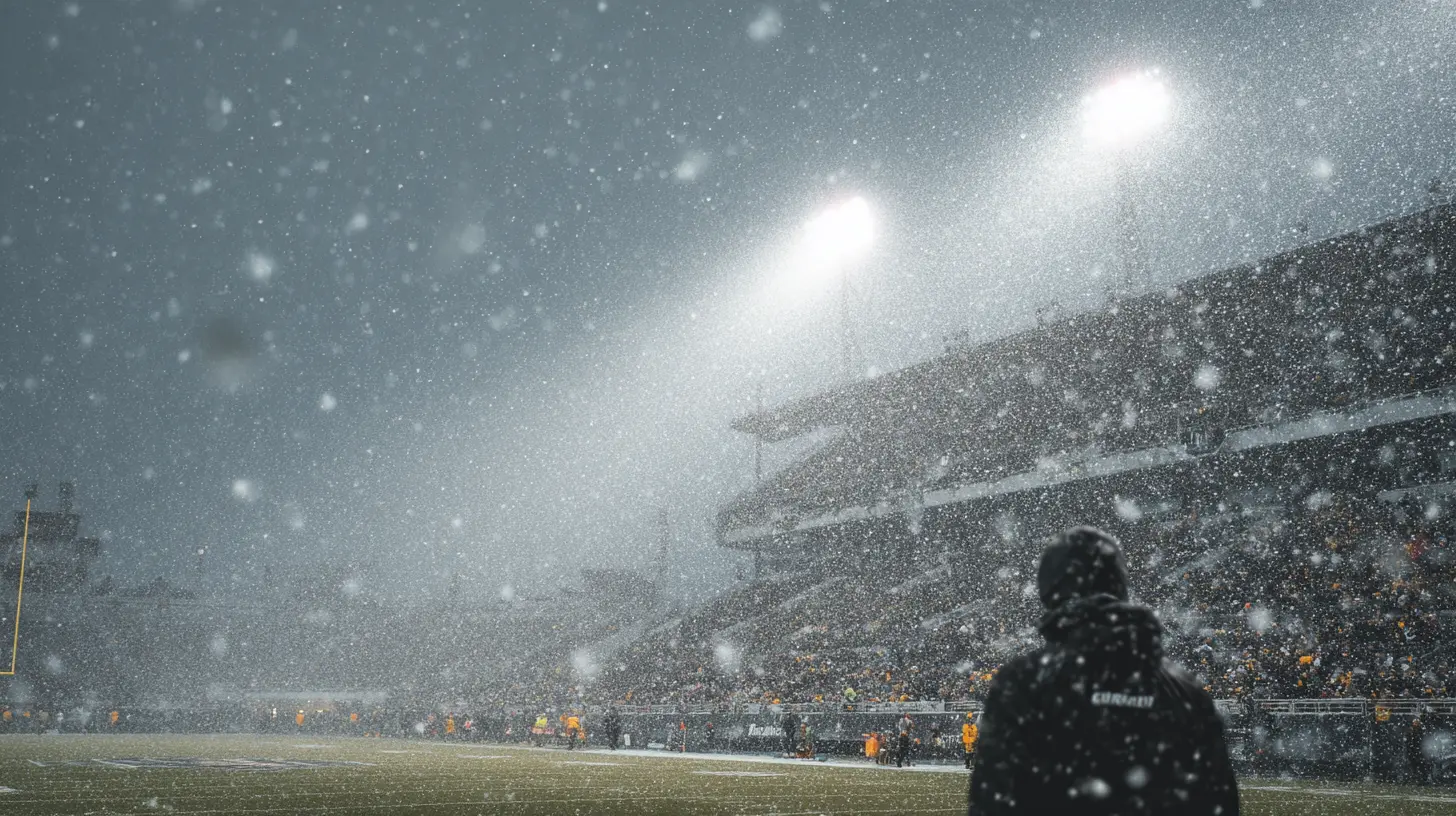
Snow sports have a straightforward dependency: you need snow. The problem is that natural snow at reliable depths is becoming less consistent at many traditional venues, especially at lower elevations.The Artificial Snow Reality
Snowmaking is not new. What is new is the scale at which it is now required. Modern snowmaking can produce a durable base, and it can be managed to create specific surface characteristics. In some cases, injected water and controlled grooming produce surfaces that are actually more consistent than natural snow for racing.But there are real costs. Snowmaking requires cold temperatures, large volumes of water, and significant energy. If a venue has a warm spell during the Games window, snowmaking capacity becomes a hard constraint. Organizers cannot manufacture cold.
What It Means for Athletes
For competitors, the shift toward more artificial and heavily groomed surfaces changes how they train. The feel underfoot is different. Edge grip, gliding characteristics, and how the surface responds to temperature changes all vary. Athletes who train exclusively on natural snow may find themselves adjusting on the fly.The smart move is to train on a mix of surface types during the prep cycle. That means seeking out venues with snowmaking infrastructure, or scheduling camps where the surface is likely to match what they will see at the Games.
The Altitude Complication
Many snow venues sit at altitude, which adds another variable. Altitude reduces air resistance, which can help in some disciplines, but it also reduces oxygen availability. Athletes need to arrive early enough to acclimatize, but not so early that they lose sharpness. The standard window is often two to three weeks, but individual responses vary significantly.Rain and Scheduling: The Forgotten Variable
Rain does not get the same attention as heat, but for sports like cricket, tennis, golf, and motorsport, it can be the single biggest factor in whether an event runs on time or turns into a logistical nightmare.Why Rain Is Harder Than It Looks
Rain affects more than whether play happens. It changes the playing surface, which changes strategy. A wet cricket pitch behaves differently. A wet tennis court changes ball bounce and footwork. A wet racetrack changes tire choice and braking points, and it can turn a predictable race into a lottery.For organizers, the challenge is scheduling. A washed-out session has to be rescheduled, which compresses the calendar, which increases injury risk and reduces recovery time. At a tournament like the World Cup, a single postponed match can cascade through the entire bracket.
What Preparation Looks Like
The best rain preparation is boring and unglamorous. It means having drainage systems that work, covered practice facilities, and flexible schedules with built-in buffer days. It means training in wet conditions so athletes are not learning on the job.For motorsport teams, it means sim work on wet setups and a clear decision framework for when to switch tires. For cricket, it means practicing with a wet ball and understanding how the pitch will behave. For tennis, it means adjusting movement patterns to avoid slips.
The mistake is assuming rain will not happen. In many regions, the historical data says it will, and the only question is when.
Wind: The Underrated Disruptor
Wind gets less attention than heat or rain, but it can decide outcomes. In athletics, a tailwind over the legal limit nullifies a record. In golf, it turns a straightforward approach into a guessing game. In cycling, it creates crosswind echelons that split the peloton. In sailing, it is the entire competition.Why Wind Is Tricky
Wind is highly local. A stadium can have swirling conditions that differ from the forecast at the nearest weather station. A coastal venue can see sea breezes that arrive like clockwork or fail to show up entirely. A mountain course can have gusts that come from directions the forecast never predicted.This means generic forecasts are often useless. What matters is venue-specific data, ideally collected over multiple events, combined with real-time measurement.
What Athletes and Teams Can Do
For individual sports, the answer is usually technical adjustment. Golfers change club selection and shot shape. Sprinters adjust their start and drive phase. Cyclists position themselves to avoid wind exposure.For team sports, it is more about tactics. A football team playing into a strong wind may keep the ball on the ground. A rugby team may kick less. These adjustments are simple in theory but require practice to execute under pressure.
The broader point is that wind preparation is about decision-making speed. The athletes who win in windy conditions are usually the ones who adapt fastest, not the ones with the best calm-weather form.
Altitude: The Quiet Multiplier
Altitude is not weather in the strict sense, but it interacts with weather in ways that matter. Lower air pressure means less oxygen, which affects endurance performance. It also means less air resistance, which affects sprinting and ball flight.The Acclimatization Question
The standard advice is to arrive early for altitude events. But "early" is vague. Research suggests that full acclimatization takes two to three weeks, but the first few days at altitude often come with reduced performance and disrupted sleep. Some athletes do better arriving very early. Others do better arriving just before competition and treating it as a short, sharp exposure.There is no universal answer. It depends on the athlete, the event, and how much time is available. What matters is testing the approach before the event that counts.
Weather Interactions
Altitude also changes how weather feels. UV radiation is stronger, so sunburn and heat stress can occur faster. Temperature drops more sharply at night, which affects recovery and sleep. Storms can build quickly in mountain environments.For the 2026 Winter Olympics and for high-altitude World Cup venues like Mexico City, these interactions are part of the planning equation.
Technology and Data: What Is Actually Useful
There is no shortage of weather apps and forecasting services. The problem is filtering signal from noise.What Elite Teams Use
At the top level, teams use a combination of sources. General forecasts provide the big picture. Venue-specific models, sometimes built in-house or with specialist providers, refine that picture. On-site measurements, including portable weather stations, provide real-time data.The key is integration. A forecast is only useful if it feeds into a decision. If the data says heat stress will be high at kickoff, someone needs to have the authority to adjust warm-up timing, hydration protocols, and substitution plans.
What Is Overhyped
Wearable sensors that claim to measure core temperature non-invasively are still developing. They can be useful as a trend indicator, but they are not yet reliable enough to be the sole basis for safety decisions. Similarly, AI-driven forecast models are improving, but they still struggle with localized convection and rapid changes.The practical advice is to use technology as one input among several, and to always have a human who understands the sport making the final call.
Practical Takeaways for 2026 Preparation
If you are an athlete, coach, or organizer preparing for events in 2026, here is what actually matters.Start with a clear-eyed assessment of the likely conditions at your target event. Use historical data, not assumptions. If the event is in a hot region, assume heat. If it is in a wet season, assume rain.
Build adaptation into your training cycle, not as an afterthought. Heat acclimation, altitude exposure, and wet-weather practice all take time. You cannot cram them.
Invest in measurement. Know your sweat rate. Know how you respond to altitude. Know how your equipment performs in wind. Data beats guesswork every time.
Have decision frameworks, not just plans. A plan says "we will do X." A framework says "if conditions are Y, we do X; if they are Z, we do W." Frameworks survive contact with reality.
Practice in the conditions you expect. If you only train in perfect weather, you are preparing for a version of the event that may not exist.
Finally, respect the margin. The difference between a good performance and a dangerous one in extreme conditions can be small. Ego and stubbornness are liabilities. The athletes and teams that handle 2026 best will be the ones that adapt fastest and smartest, not the ones that pretend weather does not matter.
The 2026 calendar will produce great sport. It will also produce stories about who handled the conditions and who did not. Preparation is where that story gets written, long before the first whistle blows.
all images in this post were generated using AI tools
Category:
Preseason AnalysisAuthor:

Umberto Flores