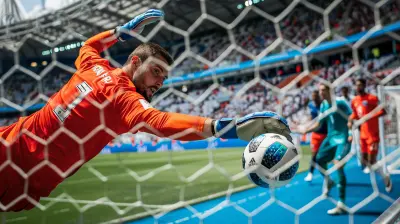
Rewriting the Record Books: Historic Feats in 2027
7 October 2026
Every so often, a year arrives that makes the record books feel less like history and more like a living document. 2027 is shaping up to be one of those years. Across track and field, swimming, basketball, soccer, and a dozen other disciplines, athletes are pushing into territory that once seemed reserved for video games and barstool arguments. What makes this particular stretch so compelling is not just the numbers themselves. It is the way those numbers are being produced: with better training science, smarter scheduling, deeper talent pools, and a generation of competitors who grew up studying the very records they are now chasing.
This article is not a highlight reel. It is a closer look at why historic feats happen when they do, what separates a genuine breakthrough from a statistical blip, and how fans, coaches, and analysts should think about records as they fall. Whether you follow one sport or many, the patterns behind these achievements are remarkably consistent, and understanding them will change how you watch the next big moment unfold.

Why 2027 Is a Breakout Year for Historic Achievements
Records do not fall on a neat schedule. They cluster. Sports historians have long noticed that certain eras produce disproportionate numbers of landmark performances, and there are concrete reasons for that.First, talent pools are deeper than ever. Countries that once sent a handful of athletes to global competitions now develop full squads. When more people compete at an elite level, the odds of an outlier performance rise. It is simple math wrapped in human effort.
Second, training knowledge travels fast. A method that works in one national program is copied, refined, and adapted elsewhere within a couple of seasons. Altitude camps, recovery protocols, and load management that were once trade secrets are now standard practice.
Third, careers last longer. Better sports medicine and more thoughtful schedules mean athletes peak for more years, and a longer peak creates more chances to attempt something historic.
Fourth, the psychological ceiling keeps moving. Once one person does something, others believe it is possible. Roger Bannister's four-minute mile is the classic example, but the same effect plays out in every sport. Belief is a performance enhancer, and it spreads.

The Anatomy of a Record-Breaking Performance
A record is rarely an accident. When you break down historic feats, you usually find four ingredients working together.Talent and Timing
The athlete has to be genuinely exceptional, and the attempt has to happen during their physical prime. A world-class competitor who peaks in an off year, or who is injured when conditions are perfect, may never get the chance. Timing is not luck. It is the product of careful planning by athletes and their teams.Conditions and Environment
Track surfaces, pool depth, ball design, altitude, wind, and temperature all influence outcomes. Governing bodies set rules to keep comparisons fair, but small margins still matter. A sprinter with a legal tailwind has a real advantage over one running into a headwind, and everyone in the sport knows it.Competition and Pacing
Rivalry lifts performance. When two or three athletes push each other, records fall more often than when one person runs alone. In distance events, pacemakers and tactical races can create the exact conditions a record attempt needs. In team sports, a tight playoff series can produce individual numbers that a blowout never would.Execution Under Pressure
The final ingredient is the hardest to measure. Records are often broken in the last minutes of a match or the final meters of a race, when fatigue is highest and focus is most fragile. The athletes who deliver in those moments tend to share one trait: they treat pressure as information rather than as a threat.
Historic Feats Across Different Sports
Track and Field
Sprints and middle-distance events remain the purest test of human speed and endurance. In 2027, the most talked-about storylines involve athletes closing in on marks that have stood for years. What makes these attempts credible is the supporting data. Coaches now track split times, ground contact, and stride frequency in real time, which means they know exactly how close an athlete is to a breakthrough before it happens.The trade-off is that chasing records can backfire. Athletes who race too often in pursuit of fast times risk injury and burnout. The best programs pick their spots, targeting two or three meets per season where conditions and competition align.
Swimming
Swimming has seen dramatic record progression over the past two decades, driven by changes in pool design, training volume, and technique. The sport also offers a cautionary tale. When technology changed the game too quickly, governing bodies stepped in to preserve fairness. That balance between innovation and integrity is something every sport wrestles with.For 2027, the interesting question is not whether records will fall, but which ones will last. Records set in ideal conditions with ideal preparation tend to hold. Records set in unusual circumstances often get erased within a few seasons.
Basketball and Team Sports
Individual records in team sports are trickier to evaluate because teammates, opponents, and coaching decisions all shape the outcome. A scoring record set in a high-possession system is not the same as one set in a grind-it-out playoff game. Context is everything.That said, team sports produce some of the most emotionally powerful historic feats: a player returning from injury to carry a team through a championship run, or a veteran setting a longevity mark that seemed untouchable. These stories resonate because they combine statistical achievement with human resilience.
Soccer and Global Football
Soccer records tend to fall in two categories: career milestones and single-season explosions. Career records reward durability and consistency, while single-season records reward peak performance in a favorable system. Both are legitimate, but they tell different stories. A career goals record says more about longevity than about brilliance on any given day. A single-season record says more about a player at their absolute best.Emerging and Niche Sports
Some of the most exciting record-chasing happens in sports that do not always make headlines. Climbing, ultrarunning, esports, and adaptive sports all feature athletes pushing boundaries with less media attention but no less commitment. Paying attention to these disciplines often gives you an early look at trends that eventually reach mainstream sports.
How Records Are Verified and Why It Matters
A record is only as meaningful as the process that confirms it. Different sports use different standards, but the core principles are similar.- Measurement must be precise and repeatable.
- Conditions must fall within agreed limits, such as wind speed or equipment specifications.
- Officials must be independent and trained.
- Documentation must be complete enough for later review.
When verification is weak, records become disputed, and disputed records undermine the entire sport. Fans argue about them, athletes feel cheated, and the historical record becomes murky. Strong verification protects everyone.
There is also a philosophical question worth considering. Should a record set with significantly better equipment count the same as one set with older gear? Every sport answers this differently. Some embrace technology. Others restrict it. Neither approach is wrong, but the choice shapes what future generations consider achievable.
The Role of Sports Science and Technology
Modern sports science has changed what athletes can do, but not always in the ways fans assume.Data and Analytics
Wearable sensors and video analysis give coaches a level of detail that was unimaginable a generation ago. They can see when an athlete is fatiguing, when technique is breaking down, and when a small adjustment could yield a meaningful gain. The result is more efficient training and fewer wasted reps.The downside is information overload. Athletes who obsess over every metric can lose the instinctive feel that made them great in the first place. The best coaches use data to inform decisions, not to replace judgment.
Recovery and Longevity
Ice baths, sleep tracking, nutrition planning, and load management have extended careers. An athlete who might have retired at 30 a few decades ago can now compete at 35 or beyond. Longer careers mean more opportunities to break records, especially career-based ones.Equipment and Surfaces
Faster tracks, deeper pools, lighter shoes, and better balls all influence performance. Governing bodies regulate these factors to keep competition fair, but the regulations themselves evolve. Understanding the current rules helps you judge whether a record is likely to stand.
Common Mistakes When Evaluating Historic Feats
Fans and analysts often make the same errors when assessing records. Avoiding these mistakes will make your own analysis sharper.- Comparing raw numbers across eras without adjusting for rule changes, equipment, or competition depth.
- Assuming a record is unbreakable just because it has stood for a long time.
- Assuming a record is meaningless because conditions were favorable.
- Ignoring the role of teammates and opponents in team sports.
- Confusing popularity with difficulty. A widely covered record is not automatically harder than a quiet one.
- Overreacting to a single performance without checking whether it fits a pattern.
The best approach is to ask three questions. What were the conditions? Who was the competition? How does this compare to the athlete's own baseline? Those three questions cut through most hype.
What Coaches and Athletes Should Consider Before Chasing Records
If you are involved in sport at any level, record-chasing requires honest self-assessment.First, decide whether the record is a goal or a byproduct. Athletes who make records their primary target often underperform because they tighten up in key moments. Athletes who focus on process tend to perform better, and records follow naturally.
Second, evaluate the cost. Chasing a record may require travel, extra races, or training loads that increase injury risk. Weigh the potential reward against the long-term health of the athlete.
Third, choose the right stage. Some records are best attempted at smaller meets with ideal conditions. Others need the energy of a major championship. There is no universal answer.
Fourth, plan the aftermath. Breaking a record changes expectations. Athletes and coaches should prepare for the attention and pressure that follow, because the season does not stop when the record falls.
What Fans Should Watch For in 2027
If you want to spot historic feats before they happen, look for these signals.- An athlete who has been consistently close to a mark for two or three seasons.
- A rule or equipment change that slightly favors performance.
- A deep field of competitors pushing each other.
- A schedule that gives the athlete multiple clean attempts.
- A coaching change or training breakthrough that unlocks a new level.
When several of these signals appear at once, a record is more likely than not. That is not a guarantee, but it is a useful filter for cutting through noise.
The Bigger Picture: Why Records Still Matter
Records are not just numbers. They are shared reference points that let us compare athletes across generations, argue with friends, and celebrate human potential. They give young competitors something concrete to aim for and give veterans a reason to keep going.At the same time, records are not the whole story. A career defined by consistency, sportsmanship, and impact on teammates can be just as meaningful as one defined by a single landmark performance. The healthiest way to follow sports is to appreciate both.
2027 will produce its share of historic feats. Some will be obvious the moment they happen. Others will only be recognized years later, when the context becomes clear. The fun is in paying attention, asking good questions, and enjoying the ride.
Final Thoughts
Historic feats in 2027 are the product of talent, preparation, conditions, and belief. They are verified through careful processes, shaped by sports science, and often misunderstood by fans who skip the context. If you want to appreciate them fully, look beyond the headline number. Examine the conditions, the competition, and the athlete's own journey. That is where the real story lives, and it is almost always more interesting than the record itself.
all images in this post were generated using AI tools
Category:
Season RecapsAuthor:

Umberto Flores