Sports Tech Startups to Watch in 2026 and Beyond
10 September 2026
The sports technology landscape has shifted dramatically over the last five years. What once felt like a niche corner of venture capital, dominated by wearable fitness trackers and ticket resale apps, has matured into a complex ecosystem touching every part of how we play, watch, and understand athletics. The startups that will define 2026 are not simply adding sensors to equipment or making slightly better analytics dashboards. They are rebuilding the infrastructure of sports itself, from youth development to professional officiating, and they are doing it with a level of sophistication that demands attention.
This is not a list of the highest funded companies or the ones with the flashiest demo days. Instead, this is a look at the categories and specific players that are solving problems so fundamental that their solutions will likely become industry standards within the next three to five years. If you are an investor, a team executive, a coach, or simply a fan who wants to know where the game is going, these are the areas worth your time.

The Shift from Data Collection to Decision Intelligence
For the past decade, the mantra in sports tech was "data is the new oil." Teams bought camera systems, player tracking vests, and biometric monitors. They hired data scientists and built internal platforms. The result? A massive glut of raw information that often sits unused because the people who need it, the coaches and athletic trainers, do not have the time or the interface to interpret it.The next wave of startups is not about collecting more data. It is about automating the interpretation. We are moving into the era of decision intelligence, where software does not just tell you what happened, but what to do next, in plain language, within seconds of the event.
Consider the challenge of in-game tactical adjustments. A basketball coach might have access to real-time shot charts and player movement data, but during a timeout, they have forty seconds to convey adjustments. A startup that can compress twenty minutes of film study into a single visual, or that can suggest a specific defensive coverage based on the opponent's pick-and-roll tendencies in the last five minutes, is worth more than a hundred spreadsheets.
The key differentiator here is the user interface. The startups that win will be those that treat the coach as the end user, not the data scientist. Expect to see more products that use natural language processing. A coach should be able to ask, "When we switch on screens, what is our opponent's effective field goal percentage?" and receive an answer instantly, without touching a keyboard. This is a hard technical problem, because it requires fusing computer vision data with contextual game logic, but it is the single most valuable application of AI in sports right now.

Computer Vision Is Eating the World, Including the Field of Play
We have all seen the broadcast overlays that track a soccer ball or show a virtual first-down line in American football. That technology is about to get exponentially cheaper and more accurate, which opens the door for startups that would have been unthinkable just a few years ago.The big opportunity is in the "middle market" of sports. Professional leagues in North America and Europe have spent millions on proprietary tracking systems. But a Division II college team, a professional rugby club in a smaller market, or a top-tier youth academy cannot justify that expense. They need a solution that works with two or three fixed cameras, or even a single iPad on a tripod, that can deliver 80 percent of the value at 5 percent of the cost.
This is where the startup opportunity lies. The technology to do pose estimation and multi-object tracking from a single low-cost camera feed has improved to the point where it is viable for performance analysis. The challenge is not the algorithm; it is the calibration. Every field is a different size, lighting conditions vary, and the camera angle is rarely perfect. Startups that have solved the "auto-calibration" problem, where the system figures out the geometry of the field without manual input, are the ones to watch. They will democratize access to elite-level analysis.
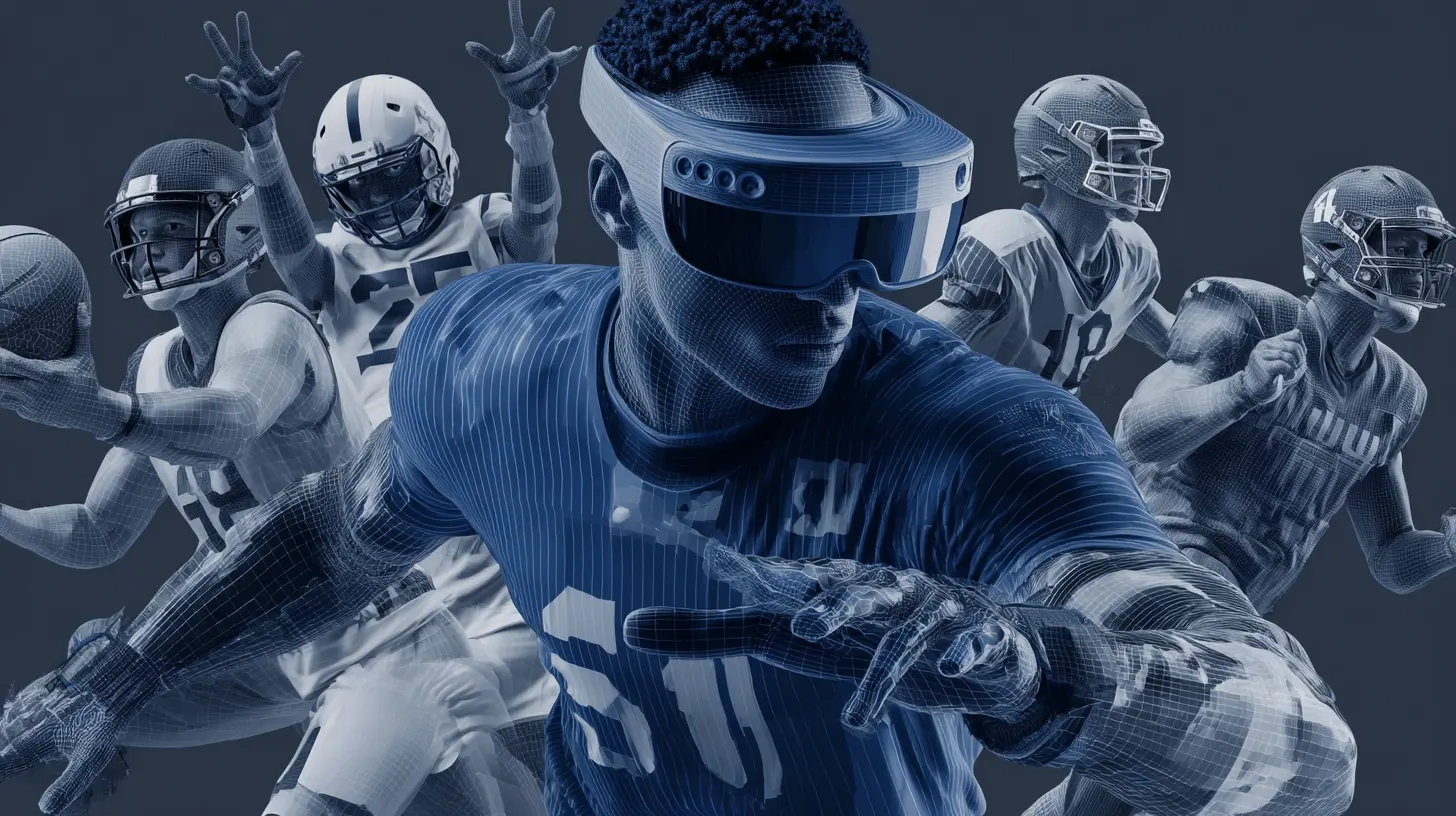
look for computer vision to move beyond player tracking and into equipment and biomechanics. Pitchers in baseball and bowlers in cricket are already using markerless motion capture to analyze their delivery. The next step is real-time feedback during a game, not just in a lab. Imagine a tennis player who receives a vibration alert on a smartwatch the moment their serve mechanics break down in the third set due to fatigue. That is not science fiction; that is a user experience problem that a startup will solve within the next two years.
The Quiet Revolution in Officiating and Rule Enforcement
Officiating is the most thankless job in sports. It is also one of the most error-prone, not because referees are bad, but because the human eye cannot track every movement at full speed. The traditional response has been video review, which is slow, disruptive, and still relies on subjective interpretation.A new generation of startups is approaching this differently. Instead of replacing the referee, they are building "assisted officiating" tools that provide real-time, objective data to support the human decision. The goal is not to eliminate controversy, which is part of the fabric of sports fandom, but to eliminate clear and obvious errors.
The most promising area is semi-automated offside detection in soccer, which uses limb-tracking cameras to create a 3D skeleton of every player and the ball. This technology is already being tested in major tournaments, and the startups behind the software are now looking to commercialize it for lower leagues.
But there is an even more interesting opportunity in sports that are still using manual measurements. In swimming, for example, the touchpad system for timing is reliable, but the turn detection and stroke count are still often done by human judges. A startup using underwater cameras and AI to provide instant stroke rate and turn efficiency data could change how races are analyzed and how athletes are disqualified.
The trade-off here is always between accuracy and flow. A system that stops the game every thirty seconds to check a call will be rejected by fans and players alike. The best startups in this space understand that their product must be silent unless it is absolutely needed. The technology must be a safety net, not a spotlight.

Wearables That Move Beyond the Wrist
The wrist-worn fitness tracker has hit a plateau. Consumers know their resting heart rate and their step count, but that information has limited utility for serious athletes. The next frontier is in wearable technology that is worn on the body, not just the arm, and that measures internal load, not just external metrics.The most exciting developments are in "smart clothing" and "smart patches." These are not gimmicks. A shirt with embedded textile electrodes can measure respiratory rate, heart rate variability, and muscle activation patterns with far greater accuracy than a watch. For sports like rowing, cycling, and swimming, where the wrist is in motion, this type of garment is essential.
More importantly, we are seeing a move toward continuous lactate threshold estimation. Traditionally, measuring lactate threshold requires a blood sample and a lab test. New optical sensors, worn on the calf or thigh, can estimate this value non-invasively by analyzing tissue oxygenation. This is a game changer for endurance sports because it allows coaches to prescribe training zones based on real-time physiological data rather than on a formula that was calculated months ago.
The startup to watch here is not the one making the sensor, but the one making the algorithm that turns the raw optical data into a training recommendation. The hardware is becoming commoditized. The intellectual property is in the signal processing and the interpretation. If a startup can accurately tell a runner that their form is degrading because of a specific muscle group fatigue, rather than just telling them their pace has slowed, they have created a product that is worth a subscription fee.
Fan Engagement Is Becoming a Two-Way Street
For a long time, sports media was a broadcast model. The team produced the game, and the fan consumed it. The internet changed distribution, but the fundamental experience remained passive. The next wave of fan engagement startups is trying to make the fan an active participant in the game itself, not just a spectator.This goes far beyond the second-screen experience of checking fantasy scores. We are talking about interactive streaming where the viewer chooses the camera angle, the audio feed, and the data overlay. But the more interesting development is in "watch and bet" integration, which is not just about gambling. It is about creating micro-moments of engagement.
Imagine a startup that allows fans to predict the outcome of the next play in real-time, with a leaderboard and bragging rights among friends. The technology to do this requires latency to be under a second. The current streaming infrastructure often has a delay of thirty seconds or more, which makes this impossible. Startups that are building low-latency streaming protocols, specifically for sports, are the foundation for this new form of engagement.
There is a significant risk in this area, which is the potential for distraction. Fans do not want a cluttered screen filled with widgets and polls during a tense moment in the game. The leading startups are those that understand the principle of "optional depth." The casual viewer sees the same clean broadcast they always have. The engaged super-fan can dig into a second or third layer of interactivity. The technology must be invisible until it is invited.
The Business of Athlete Health and Longevity
The financial pressure on teams to keep their star players on the field is immense. A single season-ending injury to a franchise quarterback or a star striker can cost a team hundreds of millions of dollars in lost revenue and diminished performance. This has created a massive incentive for startups that can predict and prevent injuries, not just treat them.The old approach was to look at workload. If a pitcher threw a certain number of pitches, they were at higher risk. This was a blunt instrument. The new approach is holistic. It combines workload data with sleep quality, hydration markers, and even psychological stress levels. The challenge is that this data is often siloed. The strength coach has one app, the medical staff has another, and the sleep doctor has a third.
The startup that wins this space will be the one that creates an "integration layer." They will not try to replace the existing tools used by the medical staff. Instead, they will ingest data from all those tools and use AI to find the patterns that precede an injury. The key insight is that injuries are rarely a single event; they are a cascade of small failures that happen over weeks. A system that can flag a subtle change in a player's running gait, combined with a drop in sleep quality, is worth its weight in gold.
However, there is a cultural hurdle. Athletes are notoriously skeptical of anything that feels like surveillance. They worry that the data will be used against them in contract negotiations. The best startups in this space are building "athlete-first" products, where the athlete owns their data and can choose what to share with the team. This is a delicate balance, but it is the only way to get buy-in.
The Globalization of Talent Identification
The traditional scouting network is inefficient. A handful of scouts travel to a limited number of games, and they rely on subjective observation. This means that talented athletes in underserved regions are often missed. The next generation of sports tech is trying to solve this problem with a combination of mobile technology and standardized testing.Startups are developing apps that allow any coach, anywhere in the world, to record a standardized athletic assessment using just a smartphone. The app uses computer vision to measure sprint times, jump height, and agility. The data is then uploaded to a cloud platform where professional clubs can search for athletes based on specific physical criteria.
This is a controversial area. Critics argue that it reduces the beautiful game to a series of numbers and that it ignores the tactical intelligence and creativity that cannot be measured by a sprint test. This is a valid concern. However, the reality is that these tools are not meant to replace scouts; they are meant to expand the net. A scout cannot be in a remote village in Ghana and a suburb of Buenos Aires on the same weekend. But a mobile assessment can be done in both places on the same day.
The startup that succeeds here will be the one that handles the cultural nuances. A standardized test that works in Germany may not be appropriate in Brazil, where athletes often develop their skills in futsal, which has a different physical profile. The platform needs to be flexible enough to account for these differences, or it will simply reinforce the biases of the countries that already have the best scouting infrastructure.
Esports and Physical Sports Are Converging
The line between physical and virtual sports is blurring. This is not just about watching people play video games. It is about the technology that connects the two. Startups are now building hybrid competitions where athletes in a physical location control an avatar in a digital world, and the physical exertion has a direct impact on the virtual performance.This requires a level of haptic feedback and motion tracking that is only now becoming affordable. A startup that can make a rowing machine that connects to an online regatta, where the resistance changes based on the virtual water conditions, is creating a new category of sport. This is not just for fitness enthusiasts; it is for professional athletes who need to train in a competitive environment without the wear and tear of the physical event.
The investment opportunity here is in the "middleware." The hardware will be made by many different manufacturers, but the software that connects the hardware to the virtual world, and that handles the fairness of the competition, is the moat. This software needs to be cheat-resistant, which is a huge technical challenge, and it needs to be consistent across different hardware manufacturers.
The Pitfalls and Misconceptions
There are several common mistakes that both startups and investors make in this space. The first is assuming that a professional team is a good early customer. Professional teams are slow to adopt, have complex procurement processes, and often want custom features that are not scalable. A better early customer is often a university athletic department or a semi-professional club that is more agile and more willing to be a design partner.The second mistake is underestimating the importance of data quality. Many startups focus on the AI model, but the model is only as good as the data it is trained on. In a chaotic game environment, the data is messy. Players occlude each other, lighting changes, and the ball is often out of frame. A startup that has spent significant time on data cleaning and labeling has a huge advantage over one that has not.
The third misconception is that selling to sports is just like selling to any other industry. It is not. The sales cycle is tied to the season. If you miss the pre-season procurement window, you have to wait a year. The decision-makers are often former athletes who value trust and personal relationships over technical specs. A startup that does not understand this dynamic will struggle, regardless of how good their product is.
What to Look For in the Next 24 Months
As we look toward 2026, the winners will be defined by their distribution strategy, not just their technology. The best computer vision algorithm in the world is worthless if it is not deployed on a field. Look for startups that have partnerships with equipment manufacturers, because the equipment is already on the field. A sensor embedded in a shin guard or a basketball is far more valuable than a camera that needs to be installed.Also, look for startups that have solved the "last mile" problem of data delivery. A coach on the sideline does not want to look at a laptop. They want a simple audio cue in their headset or a single glance at a smartwatch. The startups that understand the ergonomics of the user interface in a high-stress environment will have a durable competitive advantage.
Finally, watch for consolidation. The market is crowded, and there are too many point solutions. Expect to see the larger players, like the major sports data providers, acquire the innovative startups that have cracked a specific problem. For an entrepreneur, this might be the exit strategy.
The future of sports is not about robots replacing humans. It is about giving humans better tools to make better decisions, to stay healthier, and to perform at a higher level. The startups that respect the tradition of the game, while aggressively applying the best of modern technology, are the ones that will be here to stay.
all images in this post were generated using AI tools
Category:
Sports TechnologyAuthor:

Umberto Flores
Discussion
rate this article
2 comments
Phoebe Campbell
Exciting times ahead in the sports tech scene! With so many startups ready to shake things up, I'm eager to see how they'll change the game. From smart gear to fan engagement, the future looks bright... or should I say, game-on! Bring on 2026!
September 23, 2026 at 12:03 PM
Umberto Flores
Absolutely! The innovation in sports tech is really thrilling. Can't wait to see how these startups transform the experience for fans and athletes alike. Game on indeed!
Madison McGuffey
Exciting times ahead in sports tech! The innovations these startups are bringing will reshape how we play, train, and engage with our favorite sports. Embrace the future and get ready for new experiences that will elevate the game for athletes and fans alike. Let's cheer them on!
September 15, 2026 at 10:59 AM
Umberto Flores
Absolutely! The potential for transformation in sports tech is incredible. I can't wait to see how these innovations enhance the experience for everyone involved. Let's keep an eye on these exciting developments!