The Role of Analytics in 2026 Preseason Decisions
9 September 2026
The preseason has always been a time of hope, guesswork, and careful management. In the past, coaches relied on a mix of veteran intuition, training camp scrimmages, and a few box scores from meaningless exhibition games. Those days are gone. As we move toward the 2026 season, analytics have moved from the front office novelty to the center of every meaningful decision made before the regular season tips off, kicks off, or drops the puck.
This shift is not just about wearing GPS vests or tracking sleep patterns. Analytics now dictate who plays, who rests, who gets cut, and even how practice is structured. The teams that understand this new reality gain a significant edge. Those that treat analytics as a buzzword will find themselves making the same old mistakes, but with more data to ignore.
This article breaks down how analytics are actually shaping 2026 preseason decisions across roster construction, workload management, scheme installation, and player evaluation. It is not a theoretical discussion. It is a practical look at what works, what does not, and where the traps are hiding.

The Shift from Talent Evaluation to System Fit
For decades, the preseason was about finding the best twenty-three players, period. You ranked talent, kept the top names, and figured out the system later. Analytics have flipped that logic. In 2026, the question is not just how good a player is, but how good he is within a specific offensive or defensive structure.The Death of the "Best Player Available" Myth
Consider a wing in basketball who scores eighteen points per game in a mid-major conference. His traditional stats look solid. But advanced metrics might show he only shoots well off the catch, struggles to defend in space, and turns the ball over when pressured. If your system runs a high-volume pick-and-roll with heavy switching, that player is a liability, regardless of his scoring average.Analytics allows teams to model this before the preseason even starts. They run simulations using tracking data from college or international play. They look at how a player's release time translates against NBA closing speed. They measure lateral quickness against expected matchups. This is not about being cruel to a kid with a nice jumper. It is about avoiding the sunk cost of a training camp that was never going to work.
The practical advice here is simple: stop asking "Who is the best player?" and start asking "Who makes our best lineup better?" The preseason is the only time you can test this without consequences. Use it for that purpose.
Roster Spots as Optimization Problems
The final two or three roster spots used to go to veterans who "knew how to play." Now, those spots are often reserved for players who fill a specific analytical void. If your bench unit struggles with pace, you keep the young guard who pushes the tempo, even if his shooting percentages are poor. If your starting defense is weak against the drive, you keep the long-armed forward who may not score but alters shots at the rim.This is a trade-off. Veterans bring stability and locker room presence, which is hard to quantify. But analytics can quantify the cost of their declining foot speed or their inability to shoot from the new three-point distance. In 2026, the tiebreaker usually goes to the player who fits the system and the salary cap structure, not the one who has been around the league longer.
Workload Management: The Preseason Is Not a Tryout, It Is a Lab
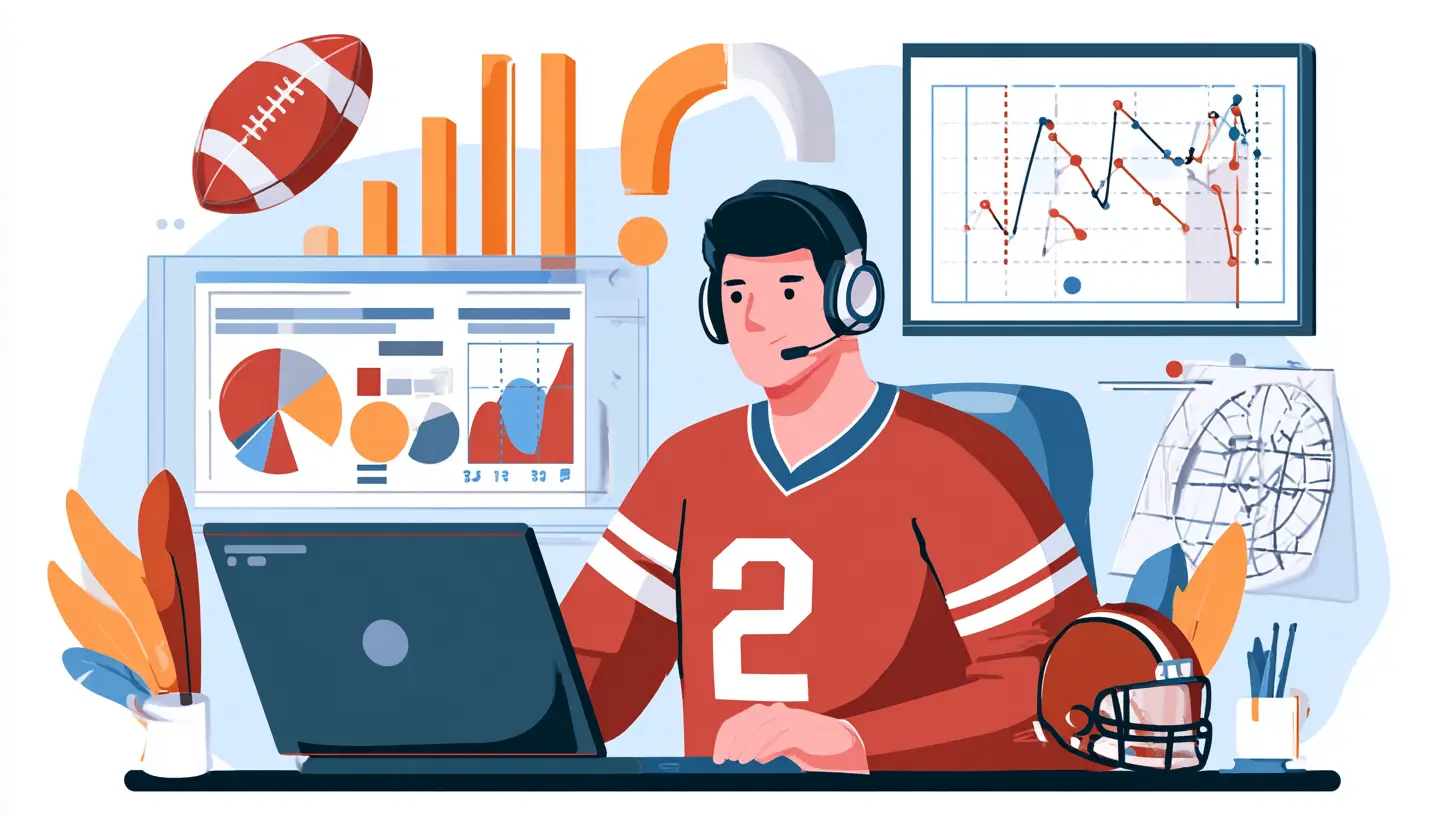
The biggest mistake teams still make is treating preseason games like real competition. Players play thirty minutes to "get into shape." Starters log heavy minutes in the third exhibition game. Then the season starts, and the hamstring injuries pile up by week three.Analytics has proven that fitness is not linear. You do not get in shape by simply playing more. You get in shape by carefully managing load, intensity, and recovery. The 2026 preseason is being redesigned around this principle.
The Role of Internal Load Tracking
Wearable technology now measures not just distance and speed, but heart rate variability, acceleration forces, and muscle oxygen levels. This data creates an internal load score that tells coaches exactly how much stress a player is under. The old method of "he looked tired" is replaced by a number that trends over time.The insight here is that external load (minutes played) matters less than internal load (physiological stress). Two players can play the same twenty minutes, but one might be sprinting at high intensity while the other is jogging through sets. The analytics tell you which player needs two days of recovery and which can go again tomorrow.
For teams, this means the preseason schedule should be built around data, not tradition. If your star player has a high training load from practice, you cut his exhibition minutes, even if the fans want to see him. If a rookie is underloaded because he is not getting enough reps, you give him extra scrimmage time. The goal is to hit opening night with every key player at a specific freshness and conditioning threshold, not to have everyone at maximum fatigue.
The Danger of Over-Resting
There is a counterargument to heavy load management. Some players perform better with rhythm and repetition. Sitting them for two weeks to keep them fresh can backfire. The 2026 analytics are nuanced enough to handle this.Instead of a blanket rule like "no starter plays more than fifteen minutes," teams are using individual baselines. A ten-year veteran might need fewer reps to stay sharp. A young free agent signing might need more to learn the system. The data tells you who falls into which category.
The best practice is to use the first two weeks of camp to establish a baseline for each player, then adjust the final two weeks of the preseason based on that data. Do not force a universal policy. Let the numbers guide individual plans.

Scheme Installation and Data-Driven Play Calling
Preseason used to be about installing a playbook. Coaches would run the same five plays over and over to get the timing down. Analytics has changed both what plays are installed and how installation is evaluated.Shot Quality and Play Selection
In basketball and football, analytics has clearly shown that certain shot types and play concepts are more efficient than others. The mid-range jumper is inefficient. The short passing game on third and long is a losing proposition. The preseason is the time to test whether your new players can execute the efficient concepts at game speed.This goes beyond simple shot charts. It involves looking at spacing, ball movement, and the number of passes before a shot attempt. Teams now track "openness" of a shot, which is not just whether the defender is close, but whether the shooter has proper balance, vision, and time to set his feet.
A 2026 preseason practice might include drills that generate specific data: how many times a player catches the ball in the "high value" zone, how quickly he releases, and what his accuracy is under varying defensive pressure. The old film session showed you mistakes. The analytics tell you which mistakes are fixable and which are physical limitations.
The Preseason as a Micro-Simulation
The smartest teams treat the first two preseason games as a controlled experiment. They might run a specific defensive scheme for the entire first half, even if it gets exploited. They want to see the data on how many open threes that scheme allows, not just whether they win the game.This requires a mindset shift. Winning a preseason game is meaningless. Gathering high-quality data on a new lineup combination is valuable. Coaches who understand this will sacrifice a meaningless victory to test a lineup that they believe will be their crunch-time unit in April.
The trade-off is that players hate losing, even in the preseason. Losing can create a negative atmosphere. The solution is to communicate clearly that the goal is not the scoreboard but the data output. When players understand that a specific defensive look was being tested, they are more accepting of the result.
Predictive Modeling for Roster Cuts and Trades
The most controversial use of analytics in the preseason is the final cut. It is one thing to say you use data to evaluate performance. It is another to tell a veteran who has been in the league for eight years that his release time is too slow to make the team.The Limits of Small Sample Sizes
The biggest mistake in preseason analytics is overvaluing what happens in two or three exhibition games. A player who shoots 60 percent from three in the preseason might be a fluke. A player who has five turnovers might be adjusting to a new system.The best practice is to use preseason data as a tiebreaker, not the primary evaluation tool. You should combine it with the player's entire career history, his practice performance, and his physical testing numbers. If a player has a consistent history of poor performance in a specific area, and the preseason confirms that trend, then you have a reason to make a change.
But if a player has good career numbers and struggles in a limited preseason sample, you should ignore the preseason entirely. The sample size is simply too small to override years of data.
The Value of a "Cut Score"
Some front offices are using a composite score that weighs different skills: shooting, defense, playmaking, rebounding, or positional specific metrics. They set a threshold for each roster spot. If a player falls below the threshold after the preseason, he is cut or traded.This approach is efficient but dangerous. It assumes the scoring model is perfect, which it never is. A player who is a poor shooter but an elite passer might get cut because the model overweights shooting. The best models have flexibility and human oversight.
The recommendation is to use the cut score as a starting point for discussion, not as a final verdict. The analytics should tell you who deserves a closer look, and who is likely not going to work out. Then the coaching staff has to watch the film and make the final call.
The Human Element: Why Analytics Fail Without Context
It would be easy to write an article saying that analytics are the savior of the preseason. That would be wrong. Analytics are a tool, and like any tool, they can be misused.The Motivation Factor
Data does not capture heart, effort, or chemistry. A player might have terrible advanced stats because he is playing with a group of players who do not pass him the ball. Another player might have inflated stats because he is going against the third-string defense.The 2026 preseason requires a blend of quantitative analysis and qualitative observation. You need the numbers to tell you what to look at. Then you need experienced coaches to watch the film and determine why the numbers look the way they do.
For example, a defensive metric might show that a rookie is allowing too many drives to the basket. The analytics say he is a liability. But the film might show that he is being asked to guard the opposing team's best player every possession, while the veteran next to him is constantly out of position. The problem is not the rookie; it is the scheme or the teammate.
The Cost of Ignoring Communication
Another human factor is communication. A player who is constantly miscommunicating on switches will have bad defensive numbers. Analytics can flag the results, but only film review and conversation can identify the cause. If the player is not verbal enough on the court, no amount of statistical modeling will fix that.The best approach is to have an analytics department that works hand-in-hand with the coaching staff, not in a separate office. The data should inform the coaching, and the coaching should inform the data. When those two groups are in conflict, the team usually suffers.
Common Misconceptions and Pitfalls in Preseason Analytics
There are several mistakes that teams consistently make when they try to apply analytics to the preseason. Understanding these can save you from making the same errors.Misconception One: More Data Is Always Better
Teams now collect hundreds of data points per player per practice. The problem is that most of this data is noise. Tracking the number of steps a player takes is not useful unless you know why those steps matter. You should always start with a question, not with a data dump. Ask "Can this player guard a specific type of scorer?" and then find the relevant metrics. Do not collect every metric and hope a pattern emerges.Misconception Two: The Preseason Is a Reliable Predictor of Regular Season Success
This is demonstrably false. The preseason features different lineups, different levels of effort, and different defensive intensity. A team that goes 0-4 in the preseason can win a championship. A team that goes 4-0 can miss the playoffs. The preseason is for testing, not for predicting.The only reliable predictor from the preseason is health and fitness. If a player comes out of camp in excellent physical condition, that is a good sign. If a player is already nursing an injury, that is a red flag. Everything else should be taken with a grain of salt.
Misconception Three: Analytics Can Replace Scouting
Analytics can tell you what a player did. It cannot tell you why he did it, or whether he can do it against better competition. Scouting is about context. Analytics is about measurement. You need both.The 2026 preseason should be a partnership between the analytics team and the scouting department. The scouts watch the games and identify tendencies. The analytics team quantifies those tendencies. Together, they paint a full picture that neither could create alone.
Best Practices for Implementing an Analytics-Driven Preseason
If you are a coach, general manager, or team executive looking to improve your preseason process, here are the key takeaways.Start with a Clear Hypothesis
Before the preseason begins, write down three or four questions you want answered. For example: "Can Player X defend the point of attack against elite speed?" or "Does Lineup Y generate enough spacing for our star player?" Then design your practices and exhibition games to answer those questions. Do not just play games and see what happens.Use a Tiered Evaluation System
Do not evaluate every player the same way. Your top eight players should have their minutes managed carefully, with a focus on health and rhythm. Your next five players are fighting for rotation spots and should get extended run in the second half of games. The final players on the roster are fighting for a job and should play as much as possible to prove themselves.Always Cross-Reference with Film
Never make a cut or a trade decision based solely on a spreadsheet. Watch the film. The analytics will point you to the right clips. The film will tell you whether the numbers are real or a product of circumstances.Be Transparent with Players
Players are not stupid. They know when they are being evaluated by analytics. If you hide the process, they will become paranoid and play tight. If you explain that the preseason is about testing specific data points, they will buy in and give you a more honest effort.
The Future: What Comes After 2026?
The role of analytics in the preseason will only grow. By 2026, we are already seeing the use of computer vision that tracks every player on the court without wearables. This provides even more detailed data on off-ball movement, spacing, and defensive rotation.The next frontier is predictive injury modeling. Teams are working on algorithms that can forecast a player's risk of soft tissue injury based on his workload pattern. If this becomes reliable, the preseason will be even more carefully managed.
There is also the question of artificial intelligence in play-calling. Some teams are experimenting with AI that suggests in-game adjustments based on live data. The preseason is the perfect testing ground for this, as the stakes are low and the data is plentiful.
However, the human element will never disappear. Sports are played by humans, and human emotion, fatigue, and motivation are not fully predictable. Analytics can reduce uncertainty, but it cannot eliminate it. The teams that win are the ones that use analytics to make better decisions, not to make decisions for them.
Conclusion
The 2026 preseason is not a relic of the past. It is the most important four-week period of the year for teams that want to gain a competitive edge. Analytics have transformed it from a series of meaningless exhibitions into a laboratory for optimization.The key is to use the data wisely. Do not overreact to small sample sizes. Do not ignore the human context. Do not let the numbers make the final call without film and coaching input. When used correctly, analytics allow you to make the tough decisions with confidence, whether that means cutting a veteran, resting a star, or changing your entire offensive scheme.
The teams that will succeed in 2026 are not the ones with the most data. They are the ones who understand what the data means and are brave enough to act on it, even when it goes against conventional wisdom. The preseason is your chance to test your theories and build your model for success. Use it wisely.
all images in this post were generated using AI tools
Category:
Preseason AnalysisAuthor:

Umberto Flores
Discussion
rate this article
2 comments
Starla Shaffer
Analytics in preseason? It's simple math. If you think stats alone can replace gut instincts, you're in for a rude awakening. Coaches need the numbers, sure, but heart and intuition still rule the game. Don't forget that!
October 17, 2026 at 10:37 AM
Azriel O'Neal
Analytics in preseason? It's like using a crystal ball that gives you stats instead of fortunes. Who knew numbers could play such a big role in shaping team vibes and game-day playlists for 2026?
October 2, 2026 at 11:07 AM