The Best Fitness Apps to Try in 2027
18 September 2026
Fitness apps have matured. The days of glorified step counters and cookie-cutter workout videos are largely behind us. By 2027, the best apps behave less like digital gimmicks and more like a knowledgeable training partner, a careful nutritionist, and a patient coach rolled into one. They adapt to your recovery, respect your schedule, and, crucially, know when to stay quiet.
But that maturity comes with a problem: the market is crowded, and the marketing is loud. Nearly every app promises personalization powered by artificial intelligence, and nearly every one claims to be the last fitness tool you will ever need. Most are not. A few are genuinely excellent. This guide separates the two.
Below, I break down the categories that matter, name specific apps worth your time in 2027, explain why they work, and flag where they fall short. I also cover the mistakes people make when choosing an app, and how to build a stack that fits your life rather than fighting it.
How Fitness Apps Changed by 2027
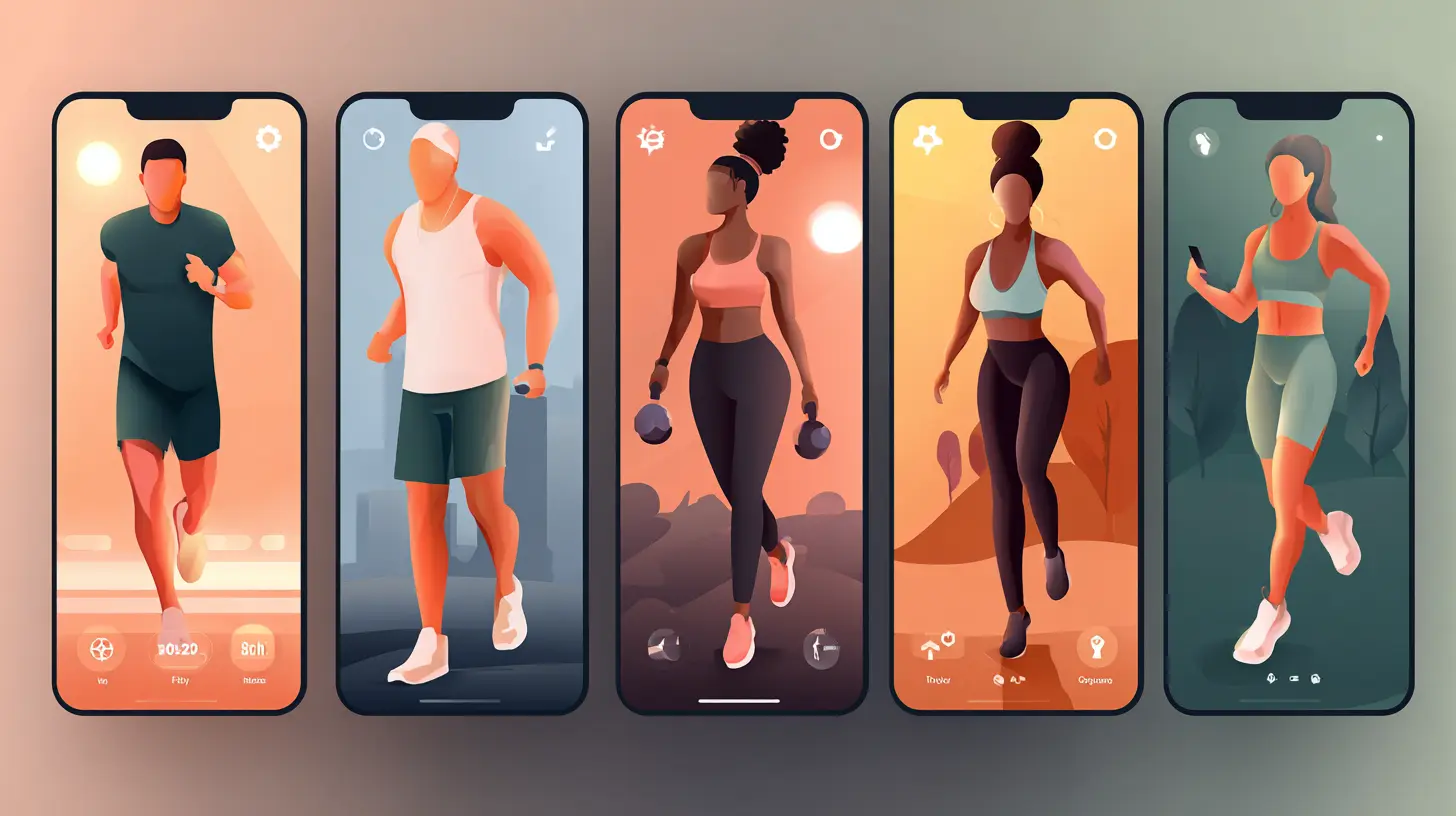
Three shifts define the current landscape.First, personalization became real. Earlier "smart" plans mostly shuffled exercise order. Modern apps adjust volume, intensity, and rest based on your logged sleep, heart rate variability, and how you rated your last session. The result is a program that bends instead of breaking when life gets messy.
Second, the line between hardware and software blurred. Whoop, Oura, Garmin, and Apple all feed data into third-party apps, and many top apps now read that data directly. Your watch or ring is no longer the product. It is the sensor. The app is where the thinking happens.
Third, retention became the battleground. Anyone can build a good first week. The hard part is keeping you engaged in month six. The best apps in 2027 solve this with community, coaching, or genuine variety, not just streaks and badges.
What Separates a Great Fitness App From a Mediocre One
Before naming names, it helps to know what you are actually judging. I look at five things.Adaptation quality. Does the app change your plan based on real signals, or does it just ask how you feel and nod along? Good adaptation is visible. You should be able to see why the plan changed.
Coaching depth. Some apps are libraries. Some are coaches. A library gives you thousands of workouts. A coach tells you which one to do today and why.
Data honesty. Does the app explain its metrics, or does it bury you in scores you cannot act on? A readiness score of 62 means nothing unless the app tells you what to do about it.
Friction. The best app is the one you actually open. If logging a workout takes four taps and a minute of scrolling, you will stop doing it.
Price transparency. Watch for paywalls that appear after you have invested time. Free trials that require a card and auto-renew quietly are a common complaint, and a fair one.
The Best Fitness Apps to Try in 2027
There is no single best app, because fitness goals diverge sharply. A powerlifter, a marathoner, and a busy parent trying to stay active need different tools. So I have grouped recommendations by what they do best.Best for Strength Training: Fitbod and Hevy
Fitbod remains the strongest choice for people who want the app to build the plan. It tracks your muscle recovery, your available equipment, and your past performance, then generates each session. The logic is sound: it avoids training the same muscle group before it has recovered and progressively overloads over time. The trade-off is control. Advanced lifters often find the generated sessions too conservative or oddly ordered, and manually overriding them takes effort.Hevy sits at the opposite end. It is a logging app, not a coach. You bring your own program, and Hevy records it beautifully. The interface is fast, the exercise library is deep, and the social features are optional rather than intrusive. If you already know how to train, Hevy will not waste your time. If you do not, it will not help you figure it out.
Practical advice: Use Fitbod if you are returning to training or want structure without thinking. Use Hevy if you follow a written program and mainly need to track progress. Do not use both. Double-logging is a fast route to quitting.
Best for Running and Endurance: Strava and Runna
Strava is less a training app and more the social layer of endurance sport. Its value is accountability and route discovery. Seeing a friend's Tuesday run can be more motivating than any badge. The weakness is that Strava does not coach you. It records and compares. If you want a plan, you need something else.Runna fills that gap. It builds structured running plans for distances from 5K to marathon, adjusts for missed sessions, and integrates strength work for runners. The plans are conservative in a good way, which matters because most running injuries come from doing too much too soon. The downside is rigidity around race dates. If your schedule shifts, the plan can feel like a nagging obligation.
When to use which: Strava for community and tracking. Runna for a specific race goal. Many runners use both, and that combination works well.
Best for General Fitness and Habit Building: Apple Fitness+ and Peloton
Apple Fitness+ has quietly become one of the most complete general fitness services. It offers strength, yoga, cycling, rowing, and meditation, all tied to your Apple Watch rings. The production quality is high, and the integration with your existing devices is seamless if you are in the Apple ecosystem. The catch is that it is not very adaptive. It is a superb library with excellent instructors, not a personalized coach.Peloton, meanwhile, has evolved beyond the bike. Its app now offers strength, running, and outdoor content without requiring its hardware. The instructor-led format is genuinely motivating for many people, and the community is one of the strongest in fitness. But the subscription cost adds up, and the experience is clearly designed to push you toward Peloton hardware.
Best practice: If you value variety and production quality over deep personalization, these are excellent. If you want an app that tells you exactly what to do based on your recovery, look elsewhere.
Best for Recovery and Readiness: Whoop and Oura
These are technically wearable companies, but their apps are the real product. Whoop leans toward athletes and emphasizes strain, recovery, and sleep coaching. Oura leans toward general wellness and emphasizes sleep quality and readiness. Both now integrate with third-party training apps, which makes them useful as a data layer rather than a standalone solution.The honest caveat: readiness scores are estimates, not verdicts. Treating a low score as a command to rest can lead to unnecessary detraining. Treating a high score as permission to go all-out can lead to overreaching. Use these apps to inform decisions, not to make them for you.
Best for Nutrition and Body Composition: MacroFactor and MyFitnessPal
MacroFactor is the most thoughtful nutrition app available today. Instead of guessing your calorie needs, it calculates your expenditure from your logged intake and weight trend, then adjusts your targets weekly. This removes the guesswork that trips up most people. It requires consistent logging, which is the price of accuracy.MyFitnessPal remains the largest food database, which matters when you eat out or buy packaged foods. Its strength is breadth. Its weakness is that the free version is increasingly limited, and the ads and upsells can be irritating.
A word of caution: No nutrition app fixes a bad relationship with food. If tracking makes you anxious or obsessive, step away. These tools are for people who find data reassuring, not for everyone.
Best for Mind-Body Work: Down Dog and Calm
Down Dog offers yoga, pilates, barre, and stretching with genuinely customizable sessions. You choose duration, focus, and intensity, and it generates a class. It is one of the few apps that feels both flexible and structured.Calm and Headspace remain the leaders in meditation and sleep. Their value is well established. The main decision is which voice and style you prefer, so use the free trials before committing.
How to Build a Fitness App Stack That Actually Works
Most people do not need one app. They need two or three that cover distinct jobs.A sensible stack looks like this:
- One training app that tells you what to do (Fitbod, Runna, or a program you follow in Hevy).
- One tracking or social layer (Strava, Apple Fitness, or your watch's native app).
- One recovery or nutrition tool, if you have a specific goal that requires it.
The mistake is stacking five apps that overlap. If two apps both track your runs, you will eventually stop logging in one, and your data becomes useless. Pick one owner for each job and let the others feed into it.
Common Mistakes and Misconceptions
Mistake one: chasing the most features. The app with the longest feature list is often the one you abandon fastest. Simplicity wins over time.Mistake two: trusting AI plans blindly. Adaptive algorithms are useful, but they do not know you have a nagging shoulder or a stressful week at work. Override them when your body says so.
Mistake three: ignoring the free tier. Many apps offer enough on the free plan to know whether you will stick with it. Use that before paying.
Misconception: more data means better results. Data only helps if it changes what you do. A readiness score you ignore is decoration.
Misconception: the app will motivate you. Motivation comes from progress and identity, not notifications. Apps support discipline. They do not replace it.
How to Choose: A Practical Checklist
Before you commit to any app in 2027, run through this:1. What is the one job I need this app to do?
2. Does it adapt to my real life, or does it demand I adapt to it?
3. Can I see why it made a recommendation?
4. How long is the free trial, and what happens when it ends?
5. Does it export my data if I leave?
If an app fails questions two and five, walk away. Locked-in data and rigid plans are the two most common reasons people quit.
Final Thoughts
The best fitness app in 2027 is not the one with the most impressive artificial intelligence or the largest content library. It is the one you open on a Tuesday when you are tired, and it tells you something useful enough to get you moving. Fitbod, Hevy, Strava, Runna, MacroFactor, and the rest are all capable tools. None of them will train for you. Choose based on the job you need done, keep your stack small, and give any app at least a month before you judge it. Consistency beats sophistication every time.
all images in this post were generated using AI tools
Category:
FitnessAuthor:

Umberto Flores