The Most Underrated Player on Every Team in 2027
20 September 2026
Every roster has a hierarchy the public can see and a hierarchy the locker room actually lives by. The visible one shows up in jersey sales, highlight reels, and national broadcasts. The hidden one shows up in late-game possessions, defensive rotations, and the quiet minutes that decide whether a season ends in April or June. This piece is about the second hierarchy. It projects, team by team, the player who will be doing the most important unrecognized work in 2027.
A few ground rules before we start. These are projections, not declarations. Rosters will shift through trades, drafts, and free agency, so the names below reflect where each franchise is trending and which players fit the profile of an underrated contributor. The criteria are consistent: the player must matter to winning, must be undervalued relative to peers with similar impact, and must be positioned to carry a larger burden than most people expect. If a name surprises you, that is the point.
What Actually Makes a Player Underrated
Most fans confuse underrated with unknown. They are not the same thing. A player can be famous and still underrated if the conversation around him misses what he actually does. A player can be obscure and properly rated if everyone in the building understands his value.The clearest markers of an underrated player are these:
- His on-off splits are dramatically better than his box score.
- Coaches scheme around him even when opponents do not.
- He absorbs difficult assignments so a star can conserve energy for offense.
- His mistakes are visible while his corrections are invisible.
- He loses minutes to a more famous player who is not actually better.
The last point matters most. Reputation has inertia. Once a narrative forms, it takes months or years to break, and roster decisions often follow narrative rather than evidence. That gap is where underrated players live.
Why This Matters More in 2027 Than Ever
Two forces are converging. First, load management has become standard practice across every major league, which means depth is no longer a luxury. It is the operating system. Second, analytics departments now track off-ball movement, screen assists, and defensive positioning at a granularity that was impossible a decade ago. The result is that front offices know who the hidden contributors are long before fans do.That creates a specific kind of market inefficiency. Teams that identify underrated players early get them on team-friendly contracts. Teams that wait pay market rate for the same production. Understanding who these players are is not just a fan exercise. It is a window into how modern roster building actually works.
The NBA: Where Spacing and Switching Decide Everything
The modern game rewards players who do two things at once: defend multiple positions and shoot without needing the ball. Those players rarely lead SportsCenter. They almost always lead in net rating.Boston Celtics: The Connective Forward
Boston's star power is established. What determines their ceiling is the forward who guards the opposing team's best wing, rotates into the paint when the center gets dragged out, and knocks down the corner three when the defense collapses. That player will not average 20 points. He will average something closer to 11 points, 6 rebounds, and a plus-minus that looks like a typo.The reason this role is underrated is structural. Switching defenses require every player on the floor to hold up in isolation, and the weakest link gets hunted relentlessly. A connective forward who can survive switches removes that target entirely. Watch his minutes against elite offenses. The difference is usually stark.
Denver Nuggets: The Backup Big Who Keeps the System Alive
Denver's offense runs through its center, which means the bench unit either replicates the system or abandons it. Most teams abandon it. The underrated player here is the backup big who can pass from the elbow, set real screens, and defend the pick-and-roll without fouling. He will play 16 minutes a night and those 16 minutes will determine whether the starters enter the fourth quarter with a lead or a deficit.Here is the trade-off teams face: a backup big who fits the system costs more than a rim-running specialist, but the specialist forces the coaching staff to run a completely different offense for eight minutes per half. That inconsistency is often the difference between a top-five offense and a top-twelve offense. The gap sounds small. Over 82 games, it is enormous.
Oklahoma City Thunder: The Defensive Guard Nobody Talks About
Oklahoma City's roster is deep enough that its fifth-best player would start for half the league. The underrated name is the guard who takes the toughest perimeter assignment every night, fights over screens instead of switching, and generates steals through anticipation rather than gambling.What separates him from a highlight-reel defender is discipline. Gambling defenders produce steals and blown rotations in roughly equal measure. Disciplined defenders produce fewer steals and far more stops. The second category wins playoff series. If you want a practical way to evaluate this, ignore steal totals and watch how often an opposing guard has to reset the offense because his initial action went nowhere.
Milwaukee Bucks: The Spacer Who Never Gets Credit
Milwaukee's success depends on whether its star has room to operate. That room is created by a forward or guard who shoots 38 percent from three on volume and, crucially, does it from the corners rather than the top of the key. Corner three-point shooting is worth more than above-the-break shooting because the distance is shorter and the shot creates better floor balance for transition defense.The underrated player here will be criticized for not creating his own shot. That criticism misses the point. His job is to stand in the right place, shoot when the ball arrives, and sprint back on defense. Simple does not mean easy. Very few players can do it at a high level for 70 games.
The NFL: Leverage Is Invisible
Football has the largest gap between public perception and actual value of any sport, because the most important players often touch the ball rarely or never.Kansas City Chiefs: The Slot Corner
Kansas City's defensive scheme asks its slot corner to cover quick receivers, support the run, and blitz occasionally. That is three jobs in one position. Slot corners are undervalued across the league because their failures happen in the middle of the field where cameras are less focused, and their successes result in an incomplete pass that nobody remembers.A useful comparison: boundary corners get paid for interceptions. Slot corners get paid for preventing third-down conversions. The second is more valuable and less visible. When you watch a Chiefs game, track how many third downs die because the slot receiver had nowhere to release.
San Francisco 49ers: The Fullback or Move Tight End
San Francisco's run game is a machine with many gears, and the least celebrated gear is the player who motions across the formation to change the blocking picture. This player might touch the ball four times a game. He will influence thirty plays.The misconception here is that blocking is a low-skill job. It is not. A move tight end has to read the defensive front, identify the Mike linebacker, and adjust his angle mid-play. That is processing speed, not just strength. Teams that undervalue this role tend to have run games that collapse against disciplined defenses.
Baltimore Ravens: The Interior Offensive Lineman
Nobody buys a guard jersey. Guards also decide whether a quarterback has a clean pocket to step into. Baltimore's offense depends on interior linemen who can pass off stunts and reach the second level in the run game.The common mistake fans make is blaming the quarterback for pressure when the pressure came through the A-gap in under two seconds. That is a guard or center problem. If you want to evaluate offensive line play without film study, watch where pressure comes from. Edge pressure is often a good rush. Interior pressure is usually a communication breakdown, and communication is the guard's job.
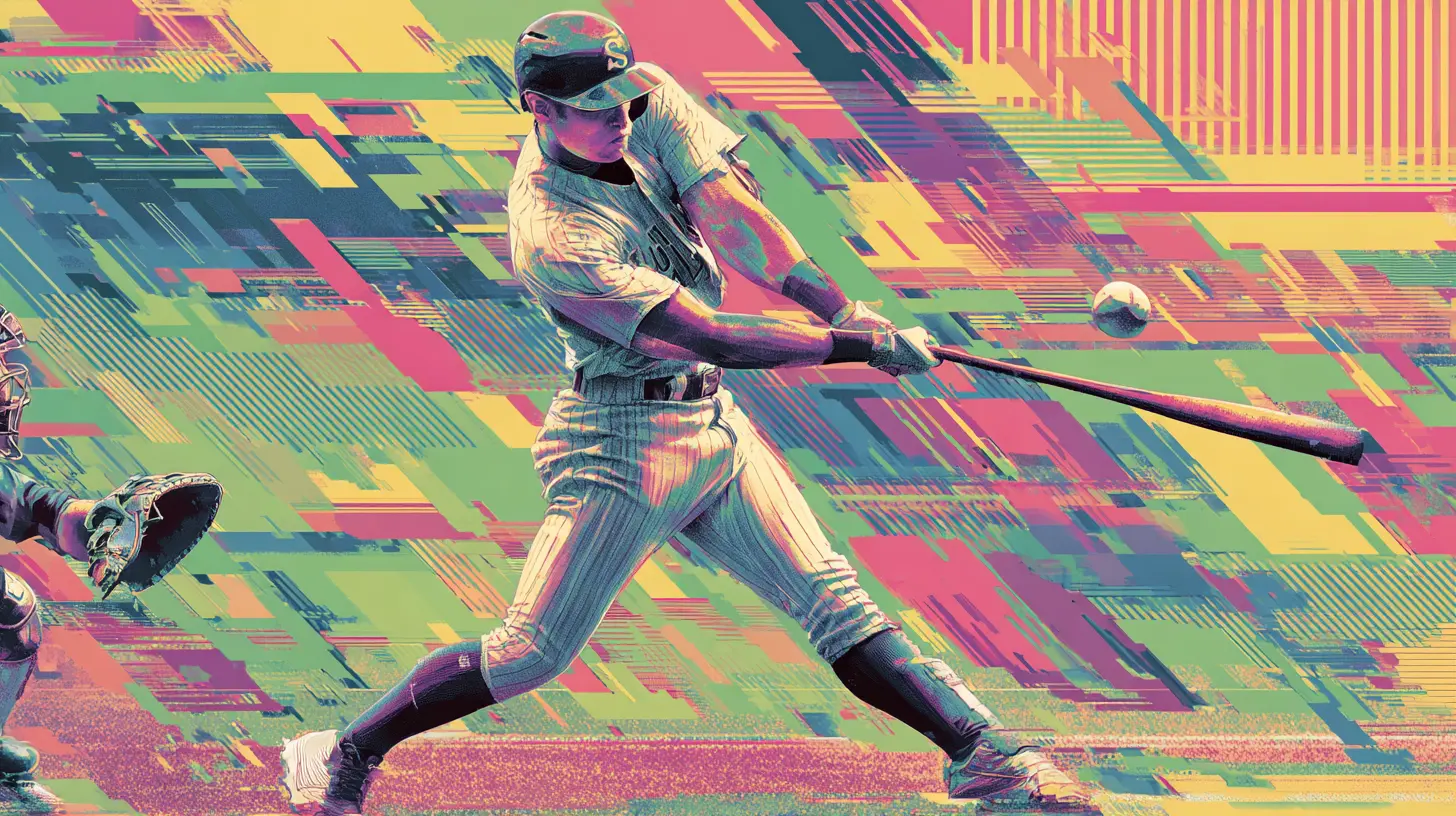
The MLB: The Positions That Do Not Show Up in Highlights
Catcher Framing and Game Calling
The most underrated player on most MLB teams is the catcher, and it is not close. Pitch framing, which is the art of receiving a pitch in a way that convinces the umpire it was a strike, is worth multiple wins per season. Game calling, which involves sequencing pitches based on hitter tendencies and pitcher strengths, is worth more.The reason catchers stay underrated is that their value is distributed across hundreds of small moments rather than concentrated in a few dramatic ones. A catcher who steals ten extra strikes per month does not appear on any leaderboard. He does appear in the win column.
The Shutdown Reliever Nobody Names
The seventh-inning reliever on a good team often faces the toughest part of the opposing lineup. Managers save their closers for the ninth, which means the highest-leverage moment frequently arrives in the seventh or eighth. The reliever who handles that moment is more valuable than the closer and typically earns a fraction of the salary.This is a market inefficiency that smart teams exploit. If you are evaluating a bullpen, look at who pitches in tied games in the seventh. That is the real hierarchy.
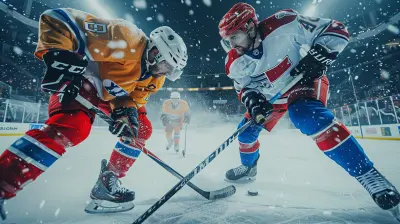
The NHL: The Players Who Win Without Scoring
The Defensive Defenseman
Hockey's underrated archetype is the defenseman who starts most of his shifts in the defensive zone, kills penalties, and never appears on the power play. His point totals will look modest. His expected goals against will be excellent.The trade-off teams wrestle with is deployment. A defensive defenseman who is elite in his own end but limited offensively forces the coach to pair him carefully. If the pairing works, he unlocks a more offensive partner. If it does not, he becomes a possession black hole. The underrated ones are the players who make the pairing work regardless of who is next to them.
The Third-Line Center
Third-line centers take on the opposing team's top line, win faceoffs in critical moments, and generate momentum through forechecking rather than skill plays. Their value shows up in matchups. When a coach can reliably neutralize an opponent's best line, the entire game plan simplifies.
The Premier League: The Midfielders Who Do the Dirty Work
The Defensive Midfielder
In modern football, the defensive midfielder is the player who receives the ball from the center backs under pressure, turns, and progresses it. He also covers the space behind attacking fullbacks. This is two roles, and the best players in the world in this position are frequently described as "quiet."The reason is that a good defensive midfielder makes the game look slow. He is always in the right place, so he never has to sprint. He plays simple passes, so he never produces a highlight. Then his team loses him to injury and suddenly concedes three goals a game.
The Fullback Who Defends First
Attacking fullbacks get the attention. Defending fullbacks get the results. A fullback who stays home allows the winger ahead of him to take risks, which increases the team's attacking output even though the fullback himself contributes no goals or assists.Common Mistakes When Identifying Underrated Players
The biggest error is using raw statistics as a proxy for impact. Points, goals, and yards are outcomes, not processes. They tell you what happened, not who made it happen.The second error is confusing effort with value. A player who runs constantly may be compensating for poor positioning. A player who looks calm may be reading the game two steps ahead.
The third error is ignoring context. A player's numbers depend heavily on teammates, deployment, and scheme. A shutdown defender on a bad team will look worse than a mediocre defender on a great one. Before you decide someone is overrated or underrated, ask who he plays with and where he plays on the field or court.
How to Evaluate Underrated Players Yourself
Start with usage and deployment. Where does the coach put this player? Who does he guard or cover? Does he start possessions or finish them?Then look at the players around him. Does his presence make teammates better? You can often see this in how a team's performance changes when he sits.
Finally, watch the unglamorous moments. The box-out, the screen, the rotation, the check. These are the actions that separate winning players from statistically similar ones. They are also the actions that almost never make a highlight package.
The 2027 Outlook
The trend line is clear. Every major sport is moving toward systems that reward versatility, decision-making, and off-ball intelligence. That shift will continue to elevate players whose value has historically been hard to see. The teams that recognize this early will have a structural advantage. The fans who recognize it early will simply enjoy the game more, because they will be watching what actually decides the outcome instead of what gets replayed afterward.If you take one thing from this, take the habit of asking a different question. Not "who scored?" but "who made the play possible?" That question is where the real analysis starts, and in 2027, it is where the championships will be won.
all images in this post were generated using AI tools
Category:
BaseballAuthor:

Umberto Flores