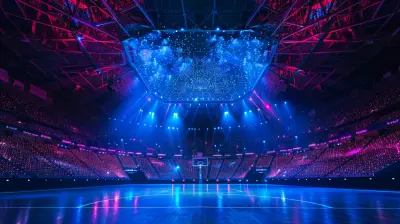
The Role of Smart Courts in Enhancing Game Play and Officiating
26 June 2026
Imagine watching your favorite tennis match, and in an instant, the screen replays the shot from every angle, confirming whether the ball clipped the line by a millimeter. Sounds futuristic? Well, welcome to the world of smart courts—a game-changer (literally) in modern sports.
Smart courts are doing way more than just showing flashy replays. They're transforming how games are played, coached, watched, and refereed. Whether you're a casual fan, a player, or even a coach, this tech upgrade is impossible to ignore. Let's dive in and break it down in simple, everyday terms.

What Exactly Is a Smart Court?
First things first—what do we mean by "smart court"?A smart court is a sports playing area (like a basketball court, tennis court, or volleyball court) that’s loaded with sensors, cameras, data-tracking systems, and AI technology. These gizmos work together to track movements, plays, ball trajectories, and even player biometrics in real time.
Think of it as giving the court a brain. It’s no longer just a surface to play on—it becomes an intelligent observer that sees everything.

Why Smart Courts Are a Big Deal
You might be wondering: "So what? What can a smart court do that humans can't?"Glad you asked. Smart courts bring consistency, accuracy, and a ton of insights that human eyes simply can't catch in real-time. They don't get tired, they don’t blink, and most importantly—they don’t play favorites.
Accuracy Like Never Before
Officiating errors have always been a thorn in the side of sports. One bad call can flip a game on its head. Remember that infamous missed call in the 2019 NFC Championship Game? Or the endless debates around tennis line calls?Smart courts use advanced tech like Hawk-Eye, high-speed cameras, and motion sensors to deliver pinpoint accuracy. No more "he said, she said." Just cold, hard, unbiased data.
Enhancing Fair Play
Fair play is the backbone of sports. With smart courts, decisions are transparent. That brings more trust into the game from both players and fans. Whether it's detecting foot faults in tennis or shot clock violations in basketball, smart tech ensures the game is played by the book.
Real-Life Smart Court Technologies
Let’s get a bit nerdy here—just for a second.Here are some of the real technologies behind the magic:
1. Hawk-Eye
Best known in tennis and cricket, Hawk-Eye uses multiple high-speed cameras to track the ball in 3D space. When a player challenges a call, Hawk-Eye replays the shot with extreme accuracy. It’s also being used in soccer (VAR), baseball, and even eSports.2. PlaySight Smart Court
Used across tennis, basketball, and other sports, PlaySight uses AI, cameras, and cloud software to analyze everything on the court. From shot selection to player movement, coaches and players get every nugget of data they’d ever want.3. Keemotion and Beyond Sports
For basketball and volleyball, these platforms offer full game-analysis automation. No human camera operator needed. They auto-track players and ball movement and deliver highlights, stats, and coaching insights.4. STRIVR and Virtual Reality Training
Some smart court setups also include VR training systems that use real-time data to simulate opponents' strategies or recreate game situations for practice. Imagine a quarterback training with a VR headset that shows him real-life blitzes based on past patterns. Wild, right?
How Smart Courts Are Enhancing Game Play
Now let’s talk about the fun part—how all this tech actually makes the sports better.Better Coaching Decisions
Smart courts give coaches more than just gut feelings and notes on a clipboard. Now, they get real-time insights into player positioning, effectiveness, stamina, and tactics. Decisions on substitutions, plays, and drills become data-driven. It’s like turning a coach into a part-strategist, part-scientist.Player Development on Steroids
Remember watching game tape? That’s old school. Smart courts let you break down every move frame-by-frame, compare performance over time, and even simulate different game scenarios. Whether you’re a high school athlete or a pro, it’s like having a personal trainer and analyst in one.Injury Prevention
Yes, smart courts can even help keep players healthier. By tracking biomechanics and effort levels, they can help detect when a player is at risk of injury. Imagine being able to predict a hamstring pull before it actually happens. That's straight-up superpower stuff.Strategic Gameplay
Teams can now prepare better by analyzing opponents through smart court data. Think about basketball—analytics can show tendencies like which side a player prefers to drive, or where most 3-point shots are taken from. It’s like having a cheat sheet, but totally legal.Revolutionizing Officiating with Smart Courts
Let’s be honest. Refereeing is tough. You've got milliseconds to make a call, crowds yelling in your ears, and thousands of angles to consider. Human refs are heroes, but they're still—well—human.Reducing Human Error
Smart courts support referees with instant data and video replays. Line disputes? Solved in seconds. Whether it’s out-of-bounds calls, foul detection, or goal-line tech, these systems add an extra layer of confidence.Faster Game Flow
With automated systems making quick decisions, there’s less delay in gameplay. No more five-minute huddles of referees watching grainy replays. The tech gets it right, fast.Enabling Remote Officiating
Believe it or not, smart courts could allow for remote refereeing. With clear, real-time feeds and data, officials don’t even need to be physically on location. That’s especially useful for global tournaments or community leagues lacking resources.
Smart Courts in Different Sports
Let’s zoom out a bit. Smart court tech isn’t only for tennis or basketball. It's spreading everywhere.- Tennis: Hawk-Eye Live is now replacing human line judges entirely at some ATP/WTA events.
- Basketball: NBA teams use data from smart courts to plan strategies and rest players.
- Volleyball: Systems track every hit, position, and rotation for in-depth analysis.
- Soccer: VAR and goal-line tech ensure fair officiating, while GPS sensors monitor player movements.
- Esports Arenas: Even esports arenas use smart tech to track player inputs, screen views, and movement patterns.
The Fan Experience Just Got Better
Smart courts don’t just help players and coaches—they make being a fan way more exciting, too.Cool Broadcasting Features
From slow-mo replays to real-time stats on your screen, watching sports has never been so engaging. Smart courts provide content creators with tools to make games more immersive and interactive.Fantasy Sports and Betting
With live data pouring in from smart courts, fantasy leagues, and sports betting are more accurate and thrilling. You get live updates that make you feel like you’re in the game.Augmented Reality
Some venues are experimenting with AR glasses and smart apps that let fans see player stats, heat maps, and shot trajectories live at the venue. It's like turning a live game into a video game.
Challenges and Concerns
Of course, it’s not all sunshine and slam dunks.Cost of Implementation
Installing smart court systems isn’t cheap. While pro teams and big leagues can afford them, local clubs and schools often can’t. That could widen the gap between high and low-resource programs.Overreliance on Tech
Sometimes, too much tech can take away the spirit of the game. There's also the risk of errors in AI judgment—which, yes, still happens.Privacy and Data Security
With all the tracking comes lots of personal data—locations, biometrics, game habits. Players and fans alike are raising questions about how that data is stored and used.The Future Is Smart (and Savvy)
Smart courts are just getting started. As AI and machine learning evolve, so will the capabilities of these systems. We could soon see courts that learn player habits and provide real-time coaching advice—or holographic officials that assist game flow. Okay, maybe that's a stretch, but who knows?For now, it's safe to say that smart courts are helping athletes play better, coaches train smarter, officials ref fairer, and fans cheer louder.
If you've never thought about how high-tech your favorite sports venues might be, now’s the time to pay attention. Because the next time you yell at the TV about a bad call—it might actually be a robot you’re arguing with.
all images in this post were generated using AI tools
Category:
Sports InnovationsAuthor:

Umberto Flores
Discussion
rate this article
1 comments
Dior McMeekin
Smart courts revolutionize sports by improving accuracy in officiating and enhancing overall gameplay experience.
June 29, 2026 at 11:00 AM
Umberto Flores
I appreciate your thoughts. Smart courts definitely bring a new level of precision and engagement to sports.